
Crack sealing is an essential part of any pavement preservation plan, especially for parking lots and driveways. A scheduled maintenance program that includes sealcoating and the use of a cold-pour crack filler can more than double the life cycle of asphalt surfaces while enhancing curb appeal. Because routine maintenance is only a fraction of the cost of repairing or replacing pavement, addressing cracks early is key. Filling cracks while they are still small helps inhibit crack growth and reduces the likelihood of additional cracking.
What You’ll Learn
- Why Crack Sealing Matters
- What Is Cold-Pour Crack Filling and Sealing?
- What Is Hot-Pour Crack Filling and Sealing?
- Featured Cold-Pour Crack Fillers and Sealants
- How to Crack Fill: Step-by-Step Process
- When to Choose Hot-Pour vs. Cold-Pour Crack Fillers
- Learn More About Pavement Protection & Sealcoating
- SealMaster Expertise & Support
Why Crack Sealing Matters
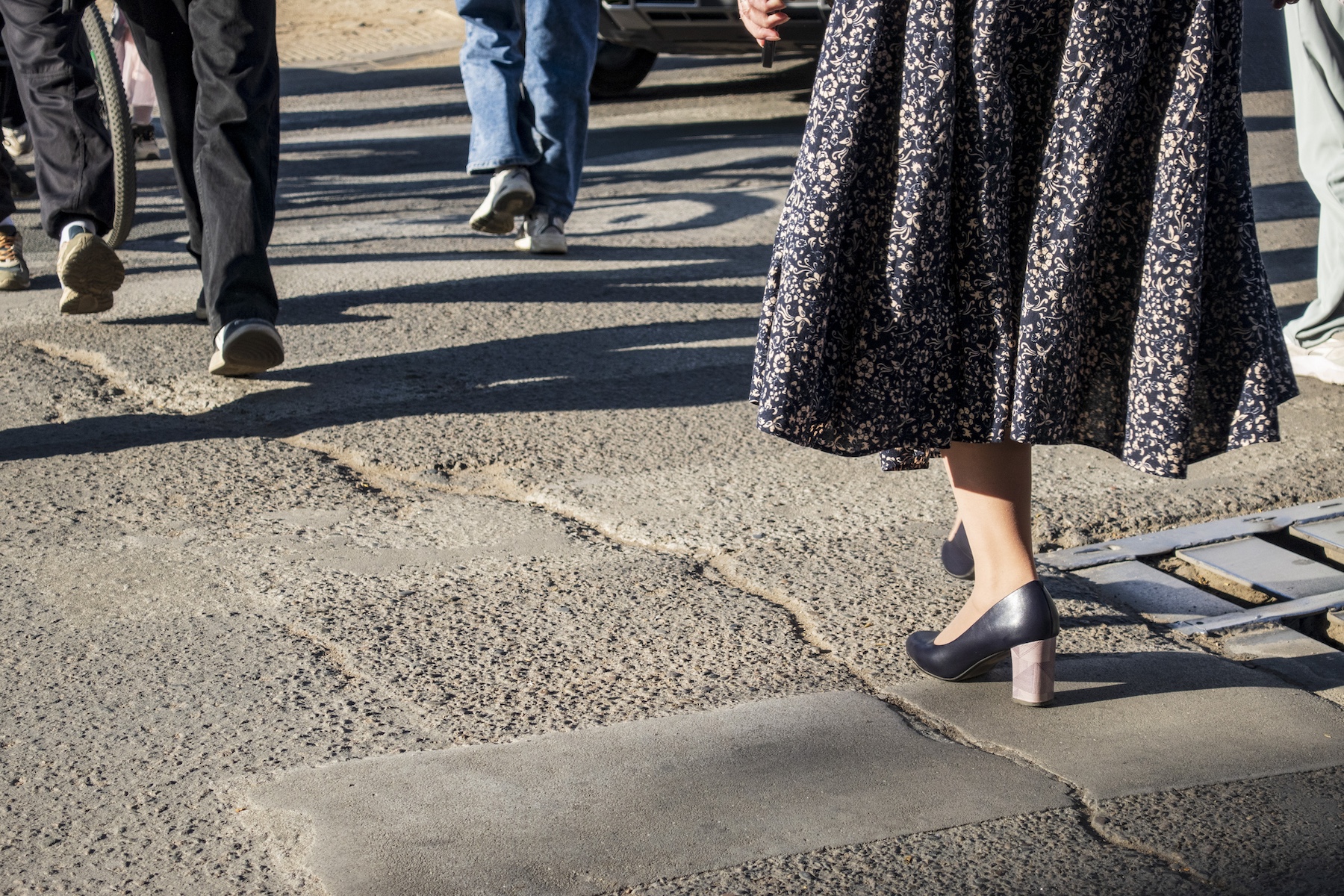
Crack sealing provides important protection against moisture intrusion, the leading cause of pavement failure. Unfilled cracks allow rain and moisture to seep through the pavement surface and erode the underlying base. Over time, this erosion leads to potholes and structural failure. Using a cold-pour crack filler helps prevent moisture penetration and slows deterioration. Sealing cracks also reduces the loss of aggregate along the crack edges.
What Is Cold-Pour Crack Filling and Sealing?
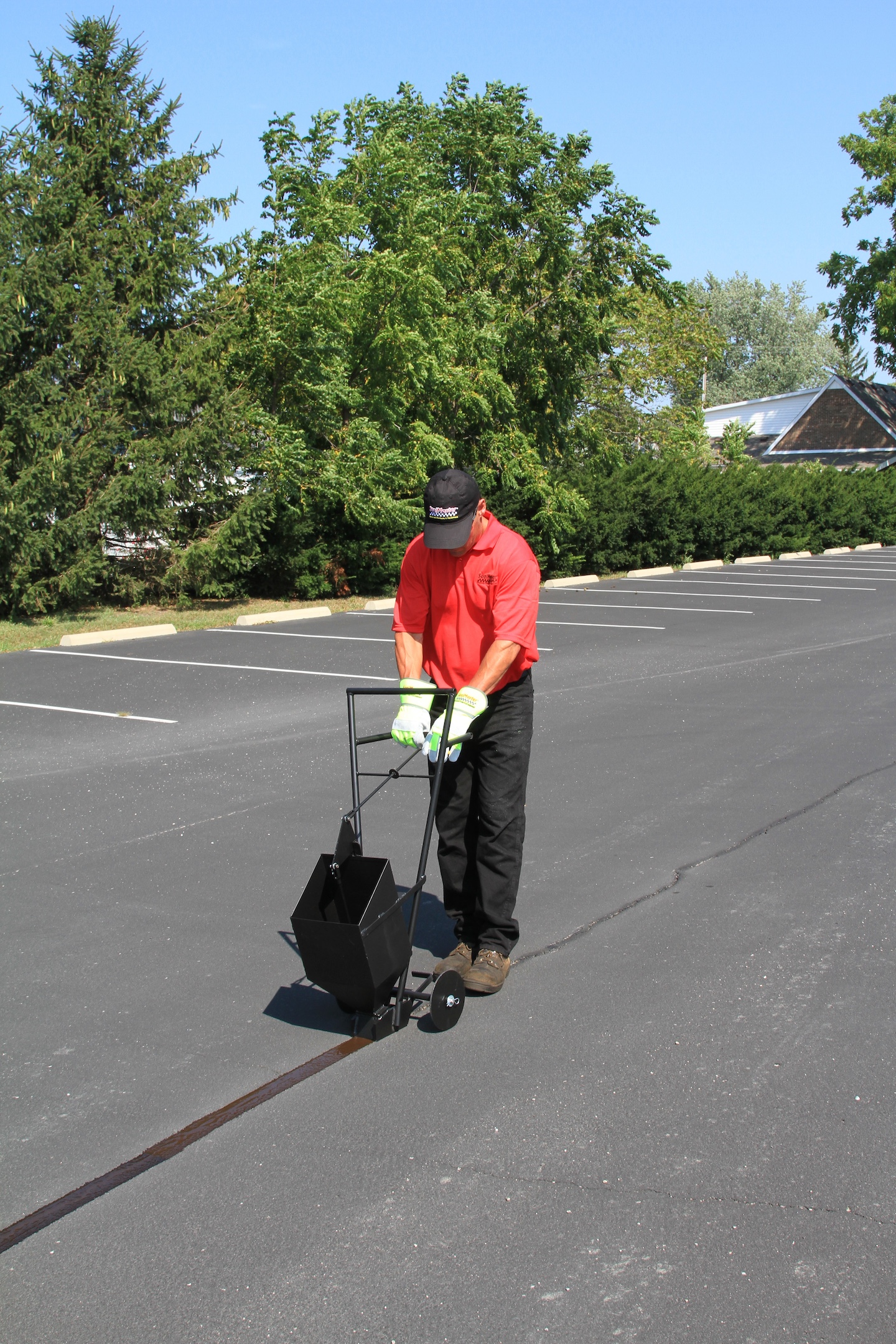
Cold-pour crack filling and sealing is an effective, economical method for repairing cracks in asphalt pavement. In the pavement maintenance industry, the terms “filling” and “sealing” are often used interchangeably. Cold-pour crack fillers typically consist of a clay-filled, polymer-modified asphalt emulsion that is applied at ambient temperatures. This approach is widely used on parking lots and driveways but can also be effective on streets and low-volume roads.
What Is Hot-Pour Crack Filling and Sealing?
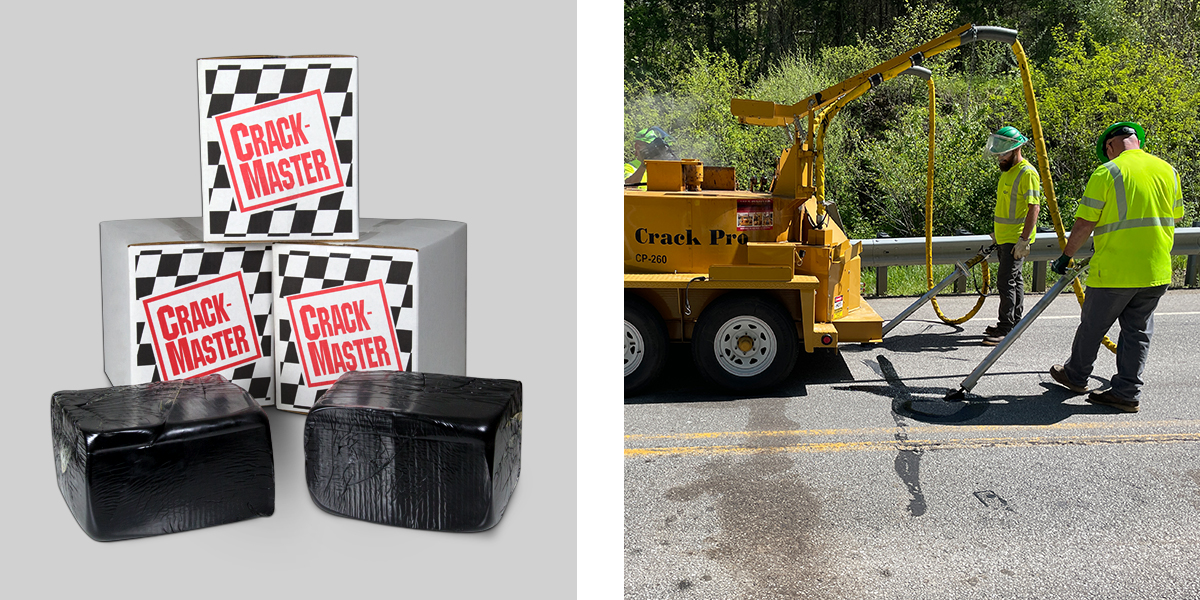
Hot-pour crack filling involves heating blocks of rubberized asphalt in an oil-jacketed melter and applying the material directly into pavement cracks. Hot-pour sealants are commonly used on roads and highways because they offer fast set times—often 10 minutes or less. Once cooled, the pavement can be opened to traffic. Hot-pour materials are best suited for large-scale roadway applications that prioritize durability and performance.
For parking lots and driveways, cold-pour crack fillers are recommended to maintain a cleaner appearance and support consistent maintenance schedules.
Featured Cold-Pour Crack Fillers and Sealants
These cold-pour crack fillers and sealants are designed for use on parking lots and driveways where clean application, surface appearance and long-term performance are priorities. Each material supports different crack sizes and pavement conditions.
TruFlex Rubberized Crack Sealant
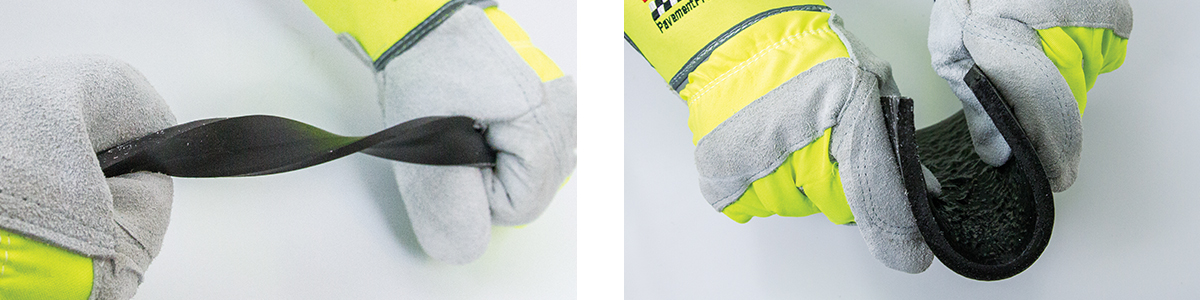
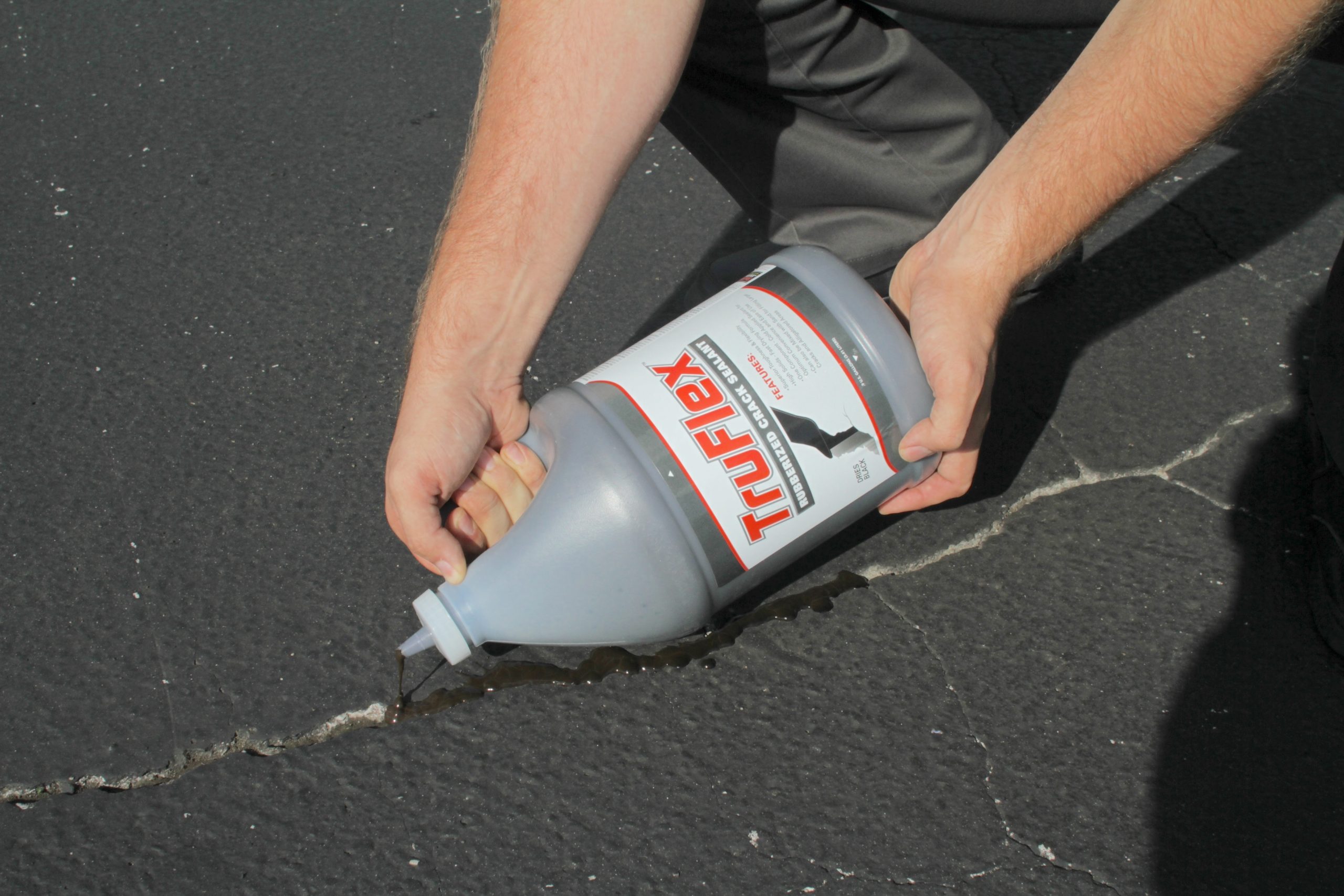
TruFlex is a highly rubberized cold-pour crack sealant formulated for asphalt and concrete pavements. It can be used straight from the container for standard crack filling or combined with sand to create a flexible, mastic-like repair material for larger cracks and alligatored pavement. Its toughness, higher softening point and resistance to UV exposure support long-term durability across changing temperatures.
What sets TruFlex apart is its ability to move with the pavement during expansion and contraction cycles while maintaining adhesion. Because it is water-based, TruFlex can also be applied to cracks that are still slightly damp—an advantage over hot-pour materials that require completely dry surfaces.
Application Notes
- May be applied using a crack banding machine, a CrackPro cold-pour unit or handheld pouring methods.
- When mixed with sand, TruFlex becomes suitable for wider or distressed areas.
- Skins over in approximately 30 minutes under normal conditions.
- Can be used to touch up missed areas on hot-pour projects without the need to reheat material.
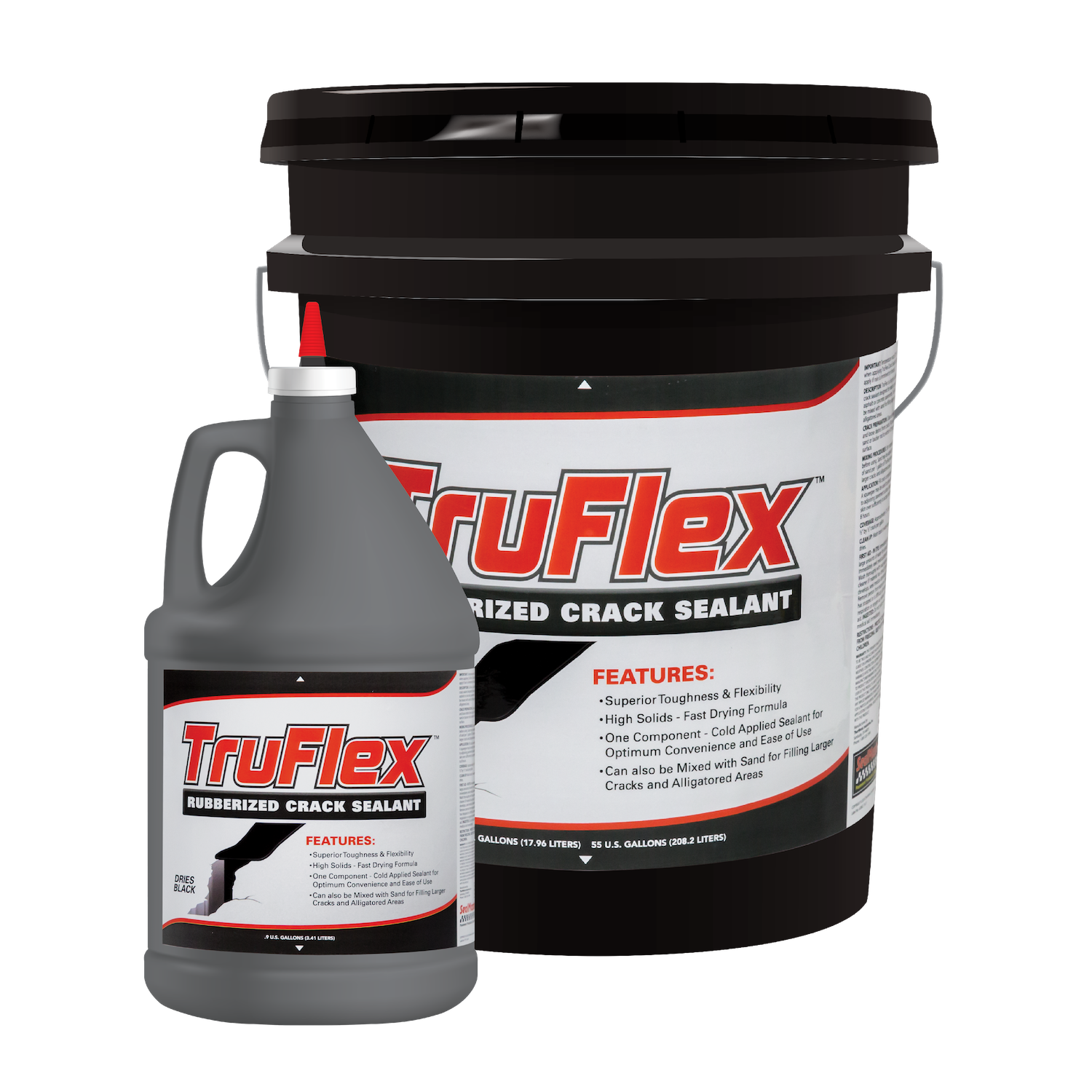
Available in: 1-gallon squeeze jug, 5-gallon pail, 55-gallon drum
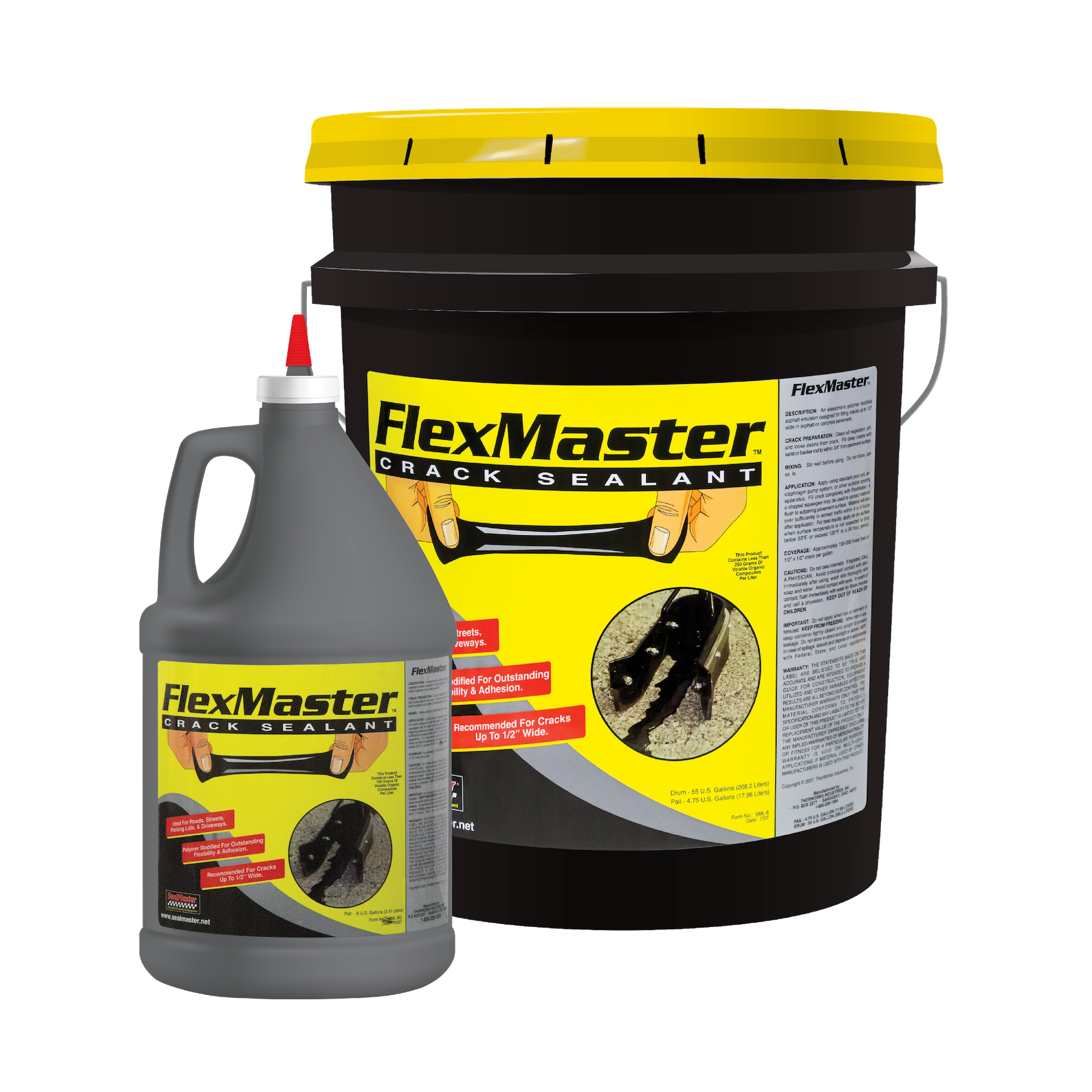
FlexMaster Elastomeric Crack Sealant
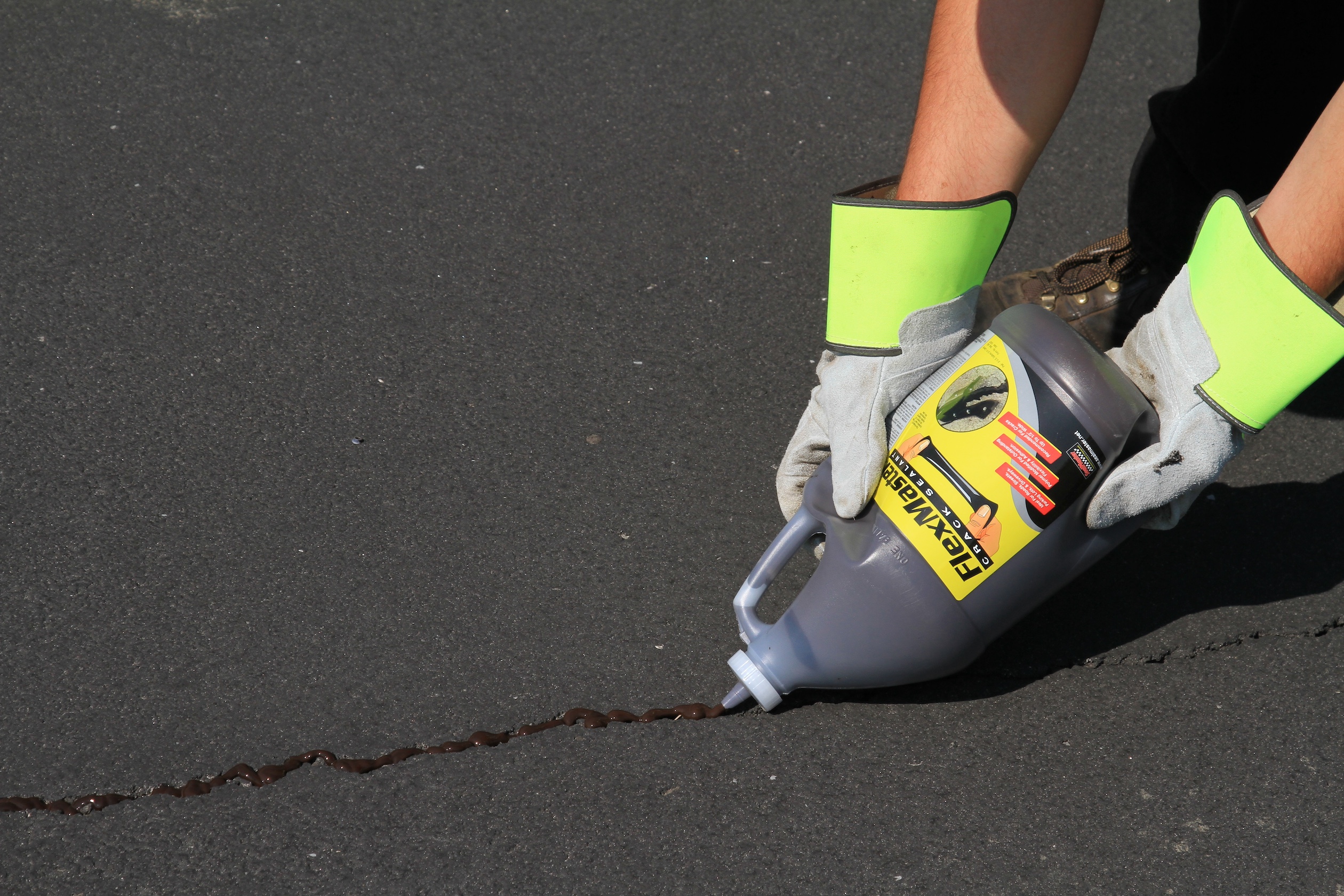
FlexMaster is an elastomeric cold-pour material designed for cracks up to 1/2 inch wide in asphalt or concrete. It remains flexible at low temperatures to accommodate normal pavement movement.
Application Notes
- Cut the spout tip to the desired opening and fill the crack completely
- A U-shaped squeegee may be used to level the material flush with the surrounding pavement
- Under typical conditions, the material will skin over enough for traffic within 4 to 6 hours
Best results occur when applied to dry pavement with temperatures between 50°F and 120°F during the 24-hour application window
Available in: 1-gallon squeeze jug, 5-gallon pail, 55-gallon drum
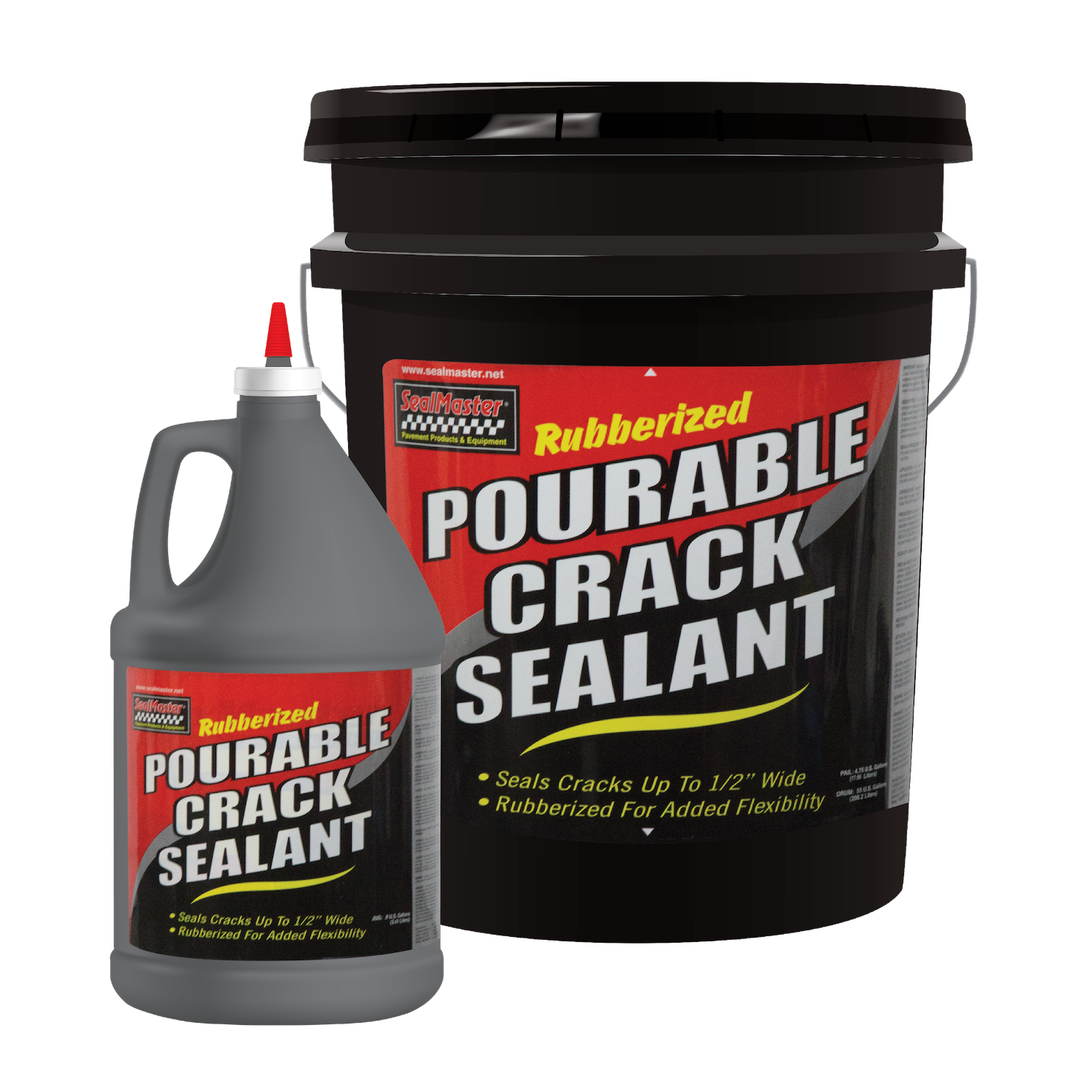
Pourable Crack Sealant
This pourable cold-pour crack filler is commonly used for general maintenance and is recommended for cracks up to 1/2 inch wide. The rubberized formulation supports flexibility and adhesion during temperature shifts.
Application Notes
- Pour directly into cracks and use a squeegee to bring the material flush with the pavement surface
- Allow to dry fully before reopening the area to traffic
Available in: 1-gallon squeeze jug, 5-gallon pail, 55-gallon drum
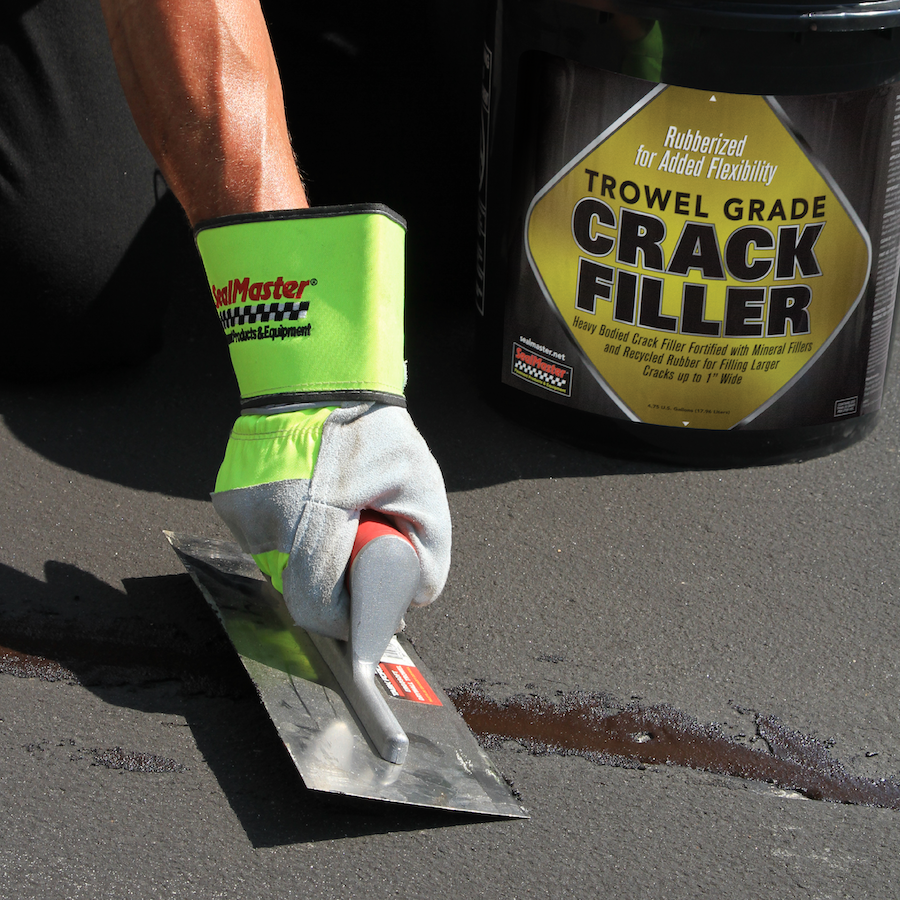
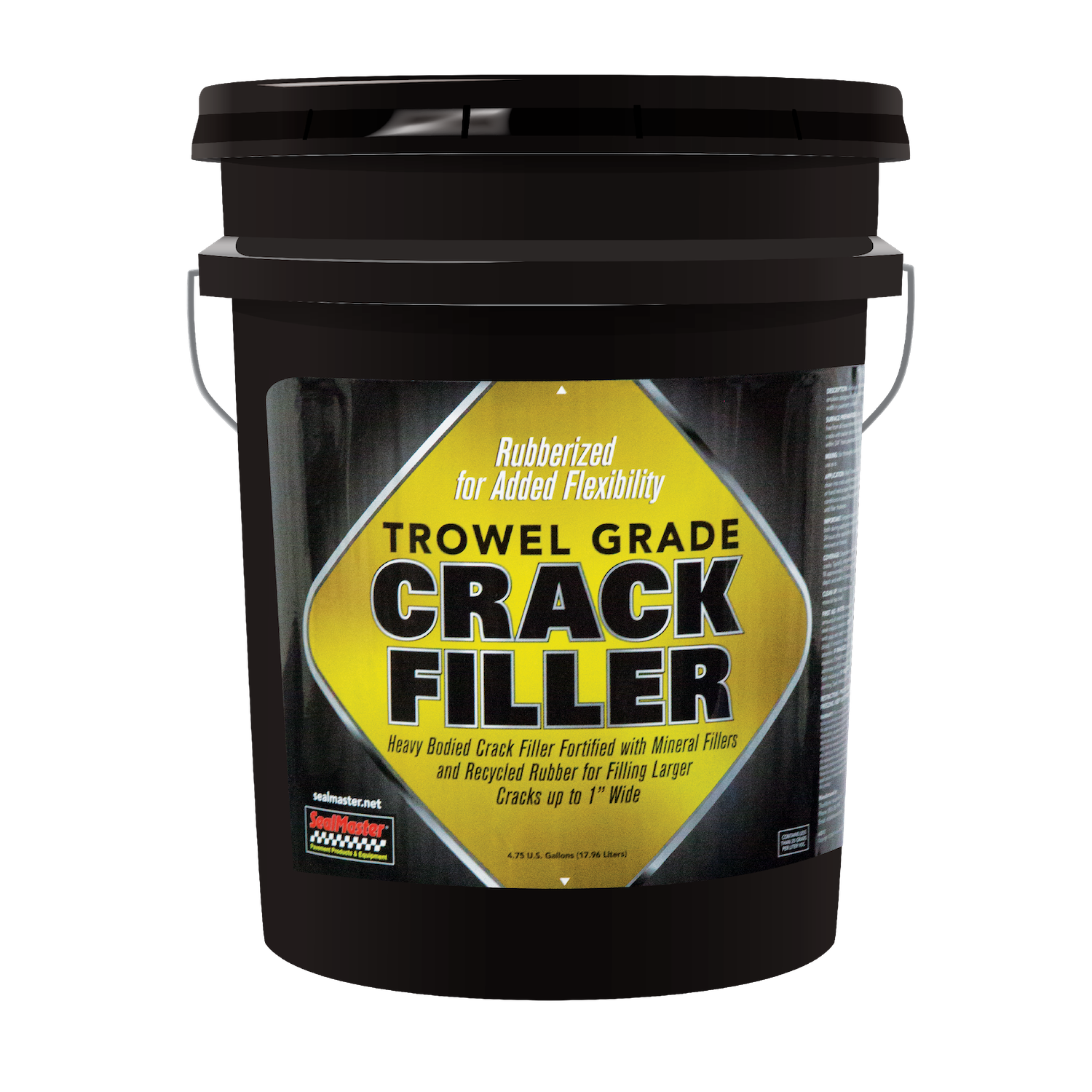
Trowel Grade Crack Filler
Trowel Grade Crack Filler is formulated with mineral additives, giving it a thicker consistency suited for larger cracks—up to 1 inch—and irregular voids where pourable materials may not settle adequately.
Application Notes
- Work the material down into the crack using a rectangular trowel, putty knife or handheld scraper.
- Under favorable weather conditions, the material sets within several hours depending on thickness.
Available in: 5-gallon pail, 55-gallon drum
GatorPave
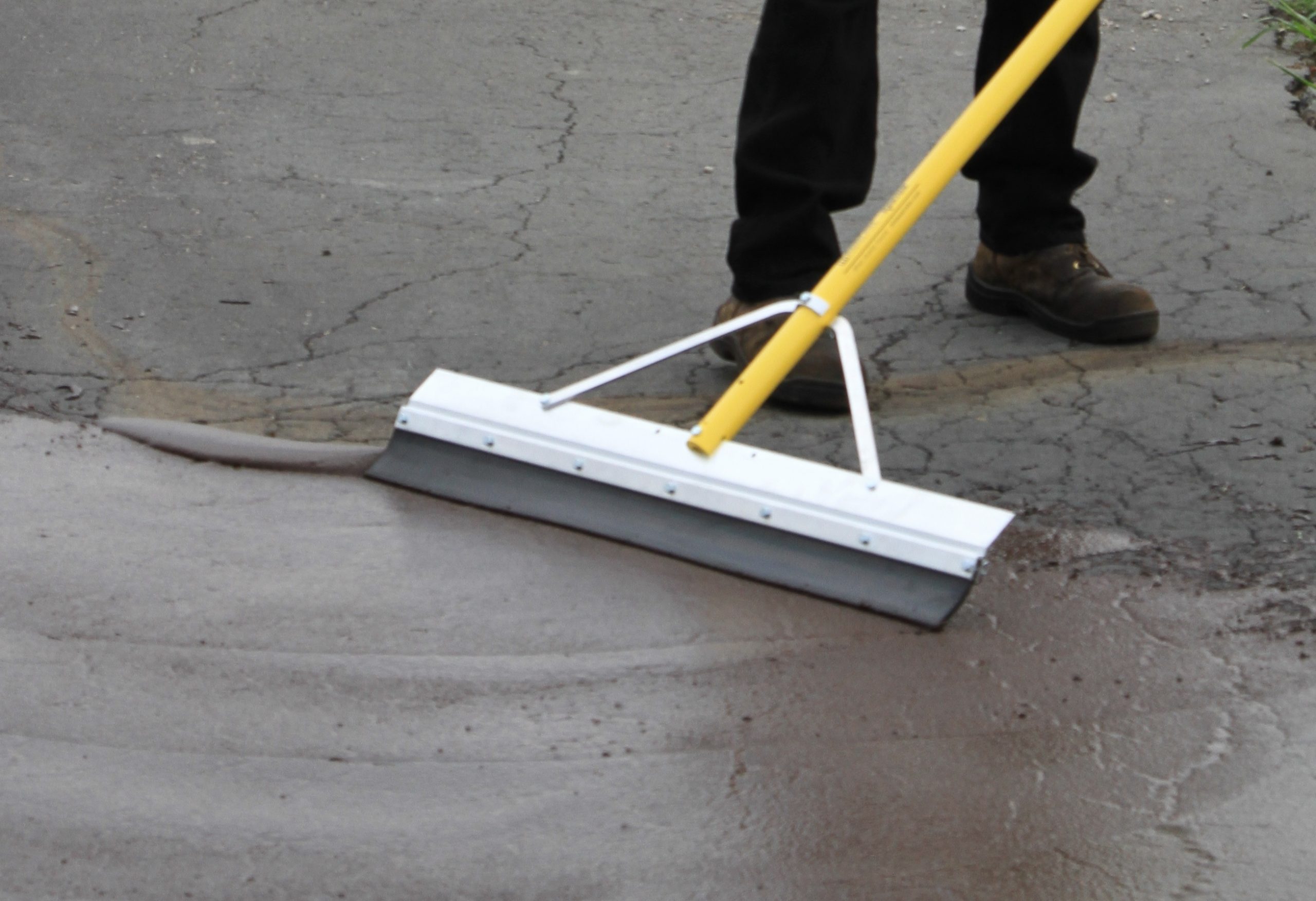
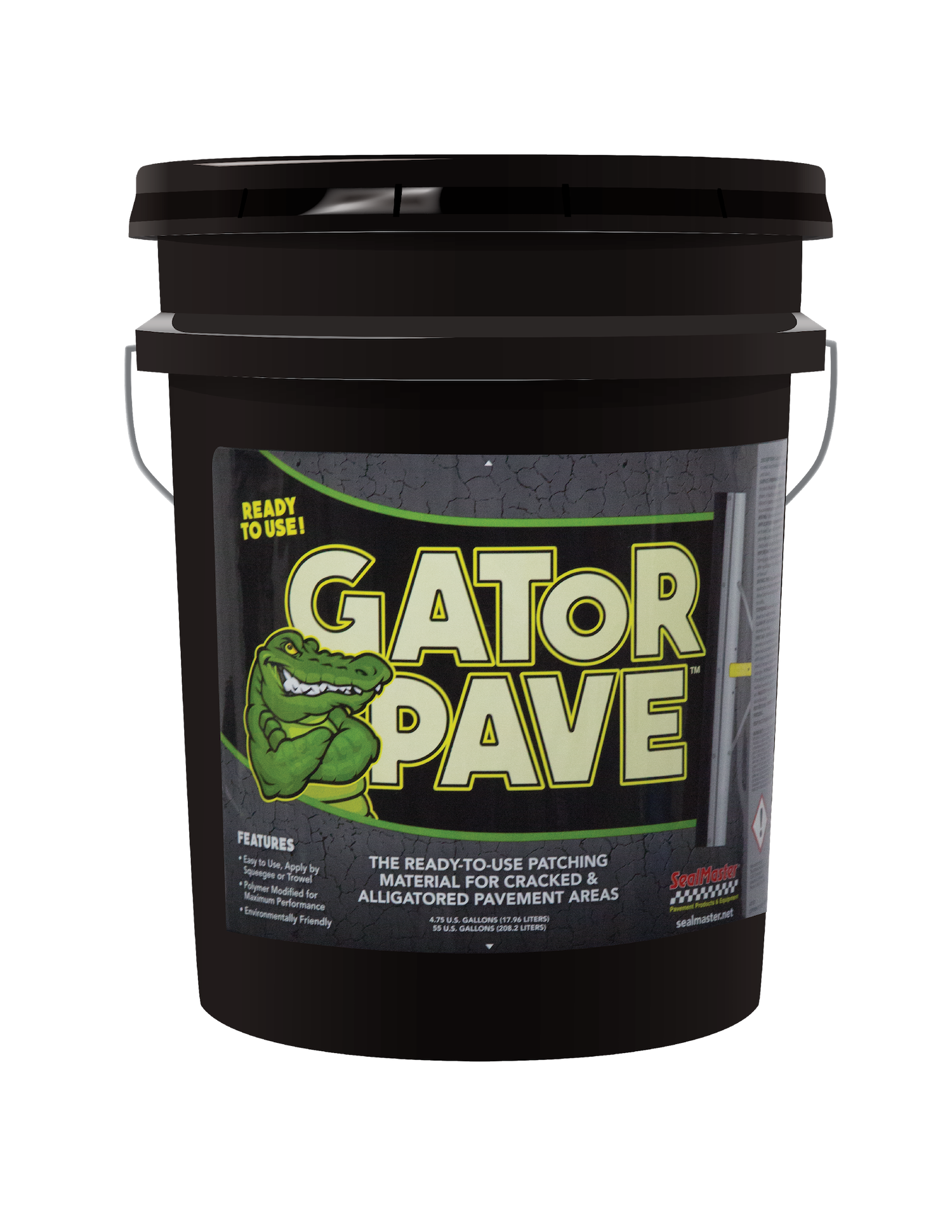
GatorPave is a cold-applied, polymer-modified patching material used to restore cracked and alligatored pavement surfaces. It can be applied by squeegee or trowel to create a stable repair prior to sealcoating.
Application Notes
- Alligatored areas: Apply by squeegee or trowel. Sand may be broadcast lightly over the material to promote sealer adhesion.
- Cracks: Fill using a trowel or U-shaped squeegee to achieve a uniform finish.
Available in: 5-gallon pail, 55-gallon drum, bulk
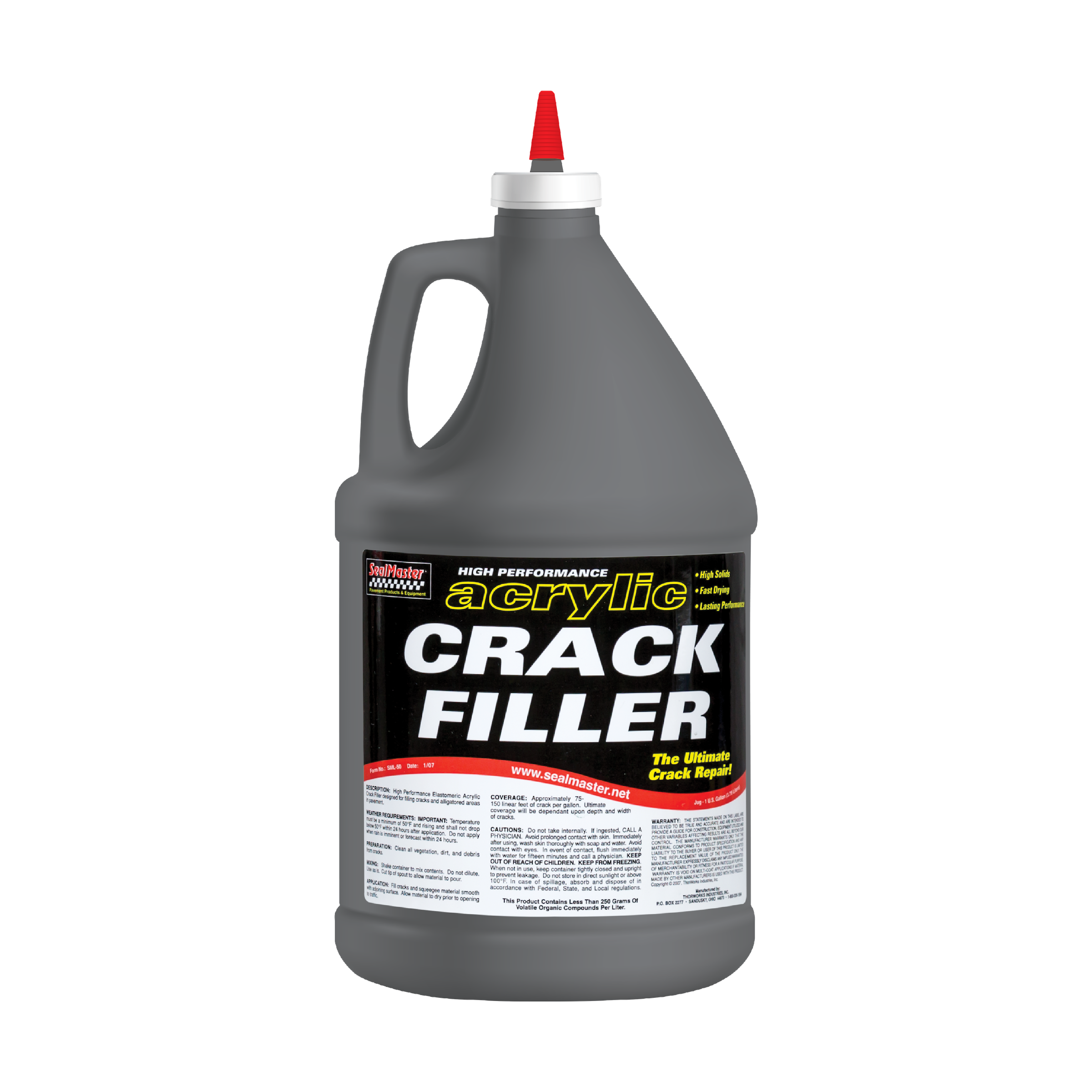
Acrylic Crack Filler
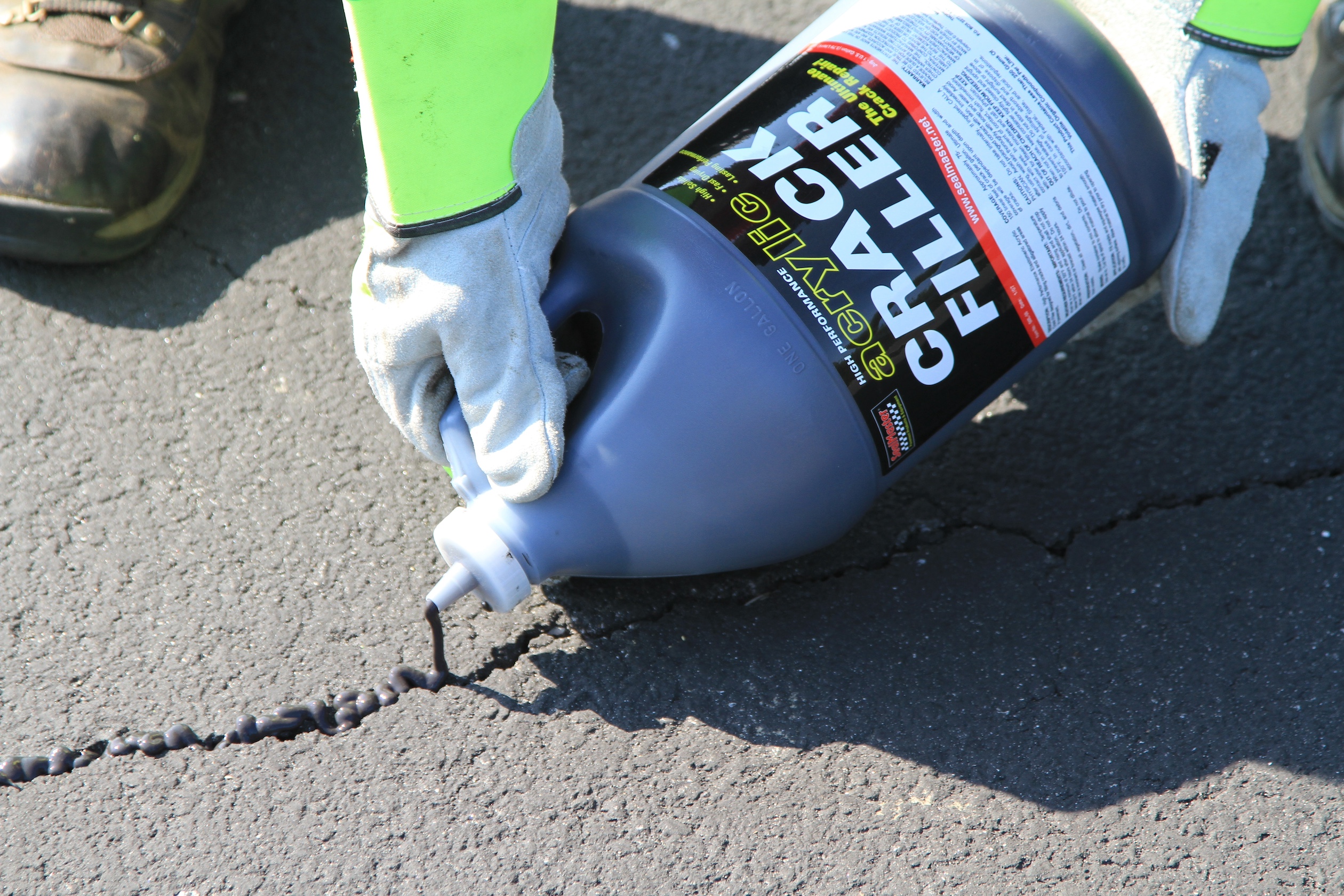
This elastomeric acrylic crack filler is formulated for narrow cracks and alligatored areas. It flexes with surrounding pavement and creates a smooth surface compatible with follow-up treatments such as sealcoating.
Application Notes
- Fill cracks and use a squeegee to smooth the material level with adjacent pavement
- Allow the material to dry before reopening to traffic
Available in: 1-gallon squeeze jug
How to Crack Fill: Step-by-Step Process
Proper crack filling begins with good surface preparation and the correct application method. While specific tools may vary, the overall process for applying cold-pour crack fillers follows the same core steps. These steps support cleaner results, stronger adhesion and long-term pavement performance—especially on parking lots and driveways.
1. Clean the Cracks Thoroughly
Before any material is applied, cracks must be free of debris. This ensures the crack filler can bond to the pavement surface.
Common cleaning tools include:
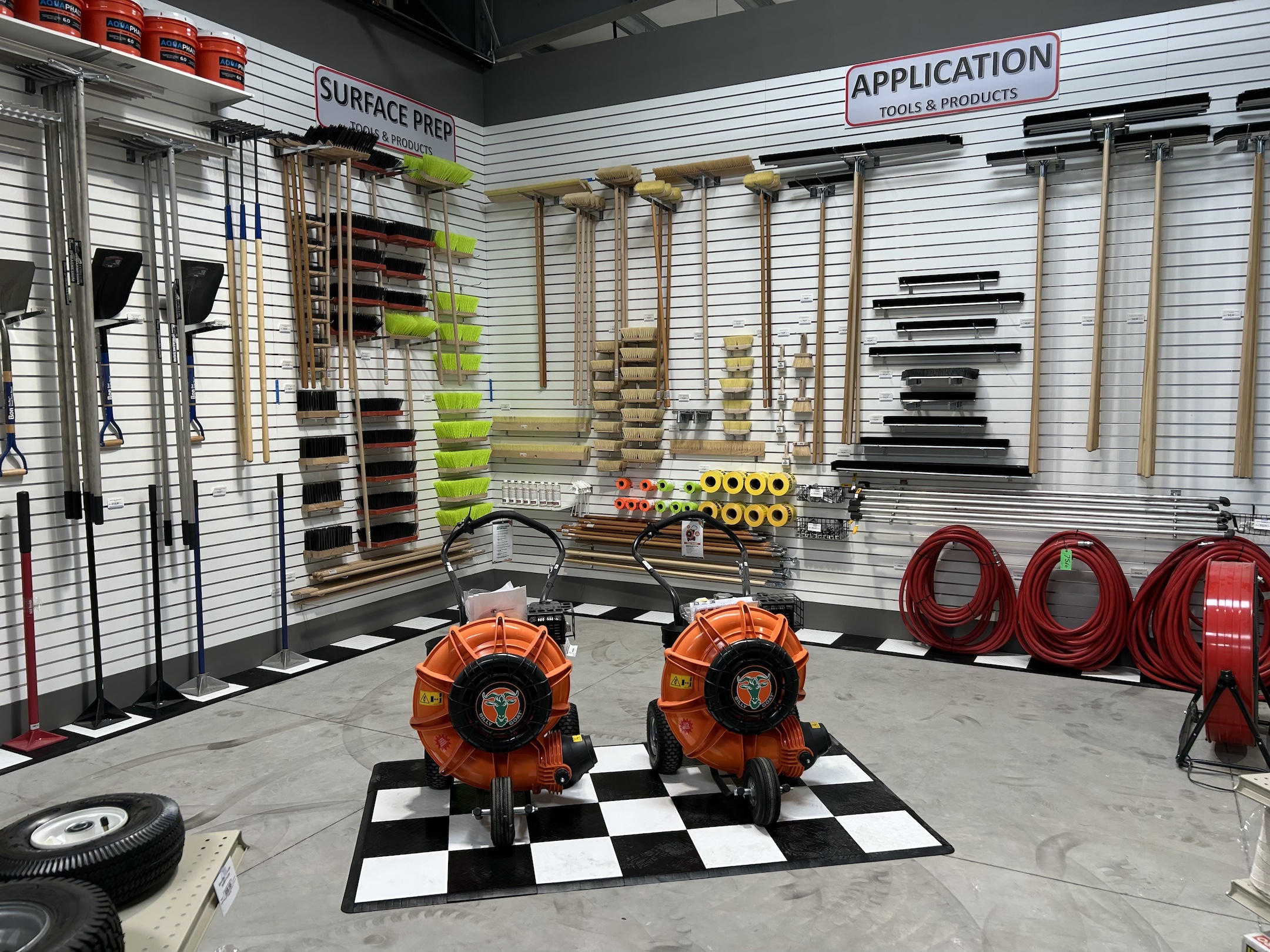
- A wire-brush edger to loosen dirt and vegetation
- A blower to remove debris from inside and along the edges of the crack
Removing debris allows the cold-pour crack filler to flow freely into the crack and form a consistent, durable seal.
2. Prepare the Material
Cold-pour crack fillers such as TruFlex, FlexMaster and other pourable sealants are designed to be used as-is, with no heating required. Installers should always review the product’s Safety Data Sheet (SDS) and Technical Data Sheet (TDS) before application to understand proper handling, storage conditions and any material-specific requirements.
If using a squeeze jug, preparation includes:
- Shaking the container to mix the contents
- Cutting the applicator tip to the desired opening
- Not diluting the material
Reviewing SDS and TDS information at this stage ensures correct application and optimal performance in the field.
3. Choose an Application Method
Cold-pour crack fillers can be applied with several tools, depending on project size and desired finish.
SealMaster approved methods are:
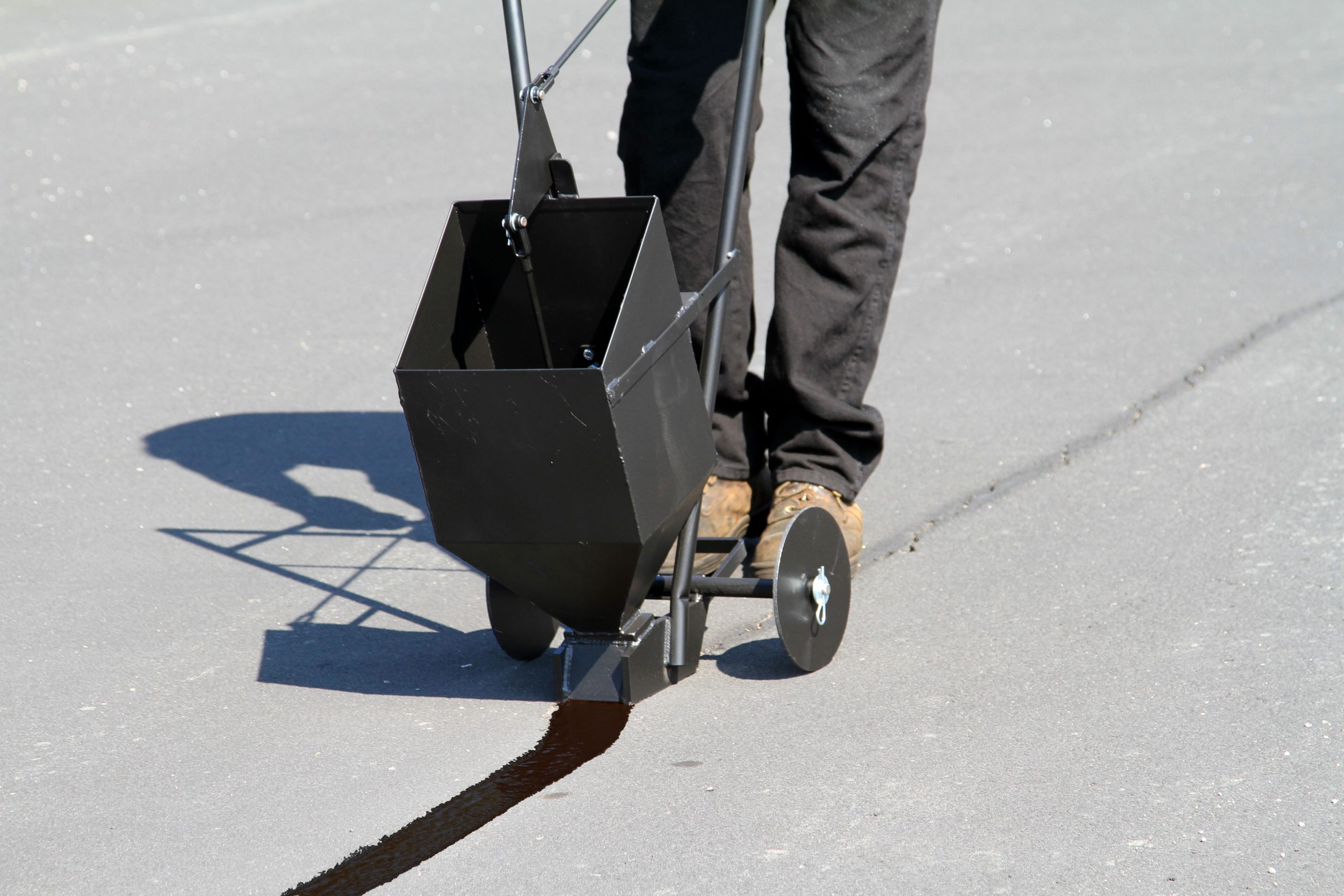
- Crack banding machine: Holds several gallons of material and applies a consistent 3-inch band over the crack, providing an even finish and efficient coverage.
- CrackPro Cold-Pour application unit: Pumps material directly from a pail or drum through a hose and wand system. The metal shoe on the wand produces a smooth, uniform 3-inch band while delivering material directly into the crack.
- Handheld pouring containers: Suitable for smaller jobs, allowing installers to pour material directly into individual cracks.
No matter which tool is used, the goal is to distribute material evenly into and over the crack to prevent moisture infiltration.
4. Optional Step: Add Sand When Needed
Some products—such as TruFlex—allow sand to be mixed into the material to create a thicker, mastic-like repair mixture. This is useful for:
- Larger cracks
- Alligatored pavement
- Distressed areas requiring structural buildup
This capability makes TruFlex particularly versatile for different levels of pavement damage.
5. Allow Material to Dry Properly
Cold-pour materials begin to “skin over” within approximately 30 minutes after application. Once the surface has skinned, sealcoating may begin as long as weather conditions are suitable.
Temperature requirements include:
- Above 50°F during application
- Above 50°F for the following 24 hours
- No rain forecast or imminent
Following these conditions helps ensure the crack filler cures properly.
6. Clean Tools Before Material Dries
Because cold-pour products are water-based, tools should be washed promptly
after application. Cleaning them before the material dries helps prevent buildup and extends the life of application equipment.
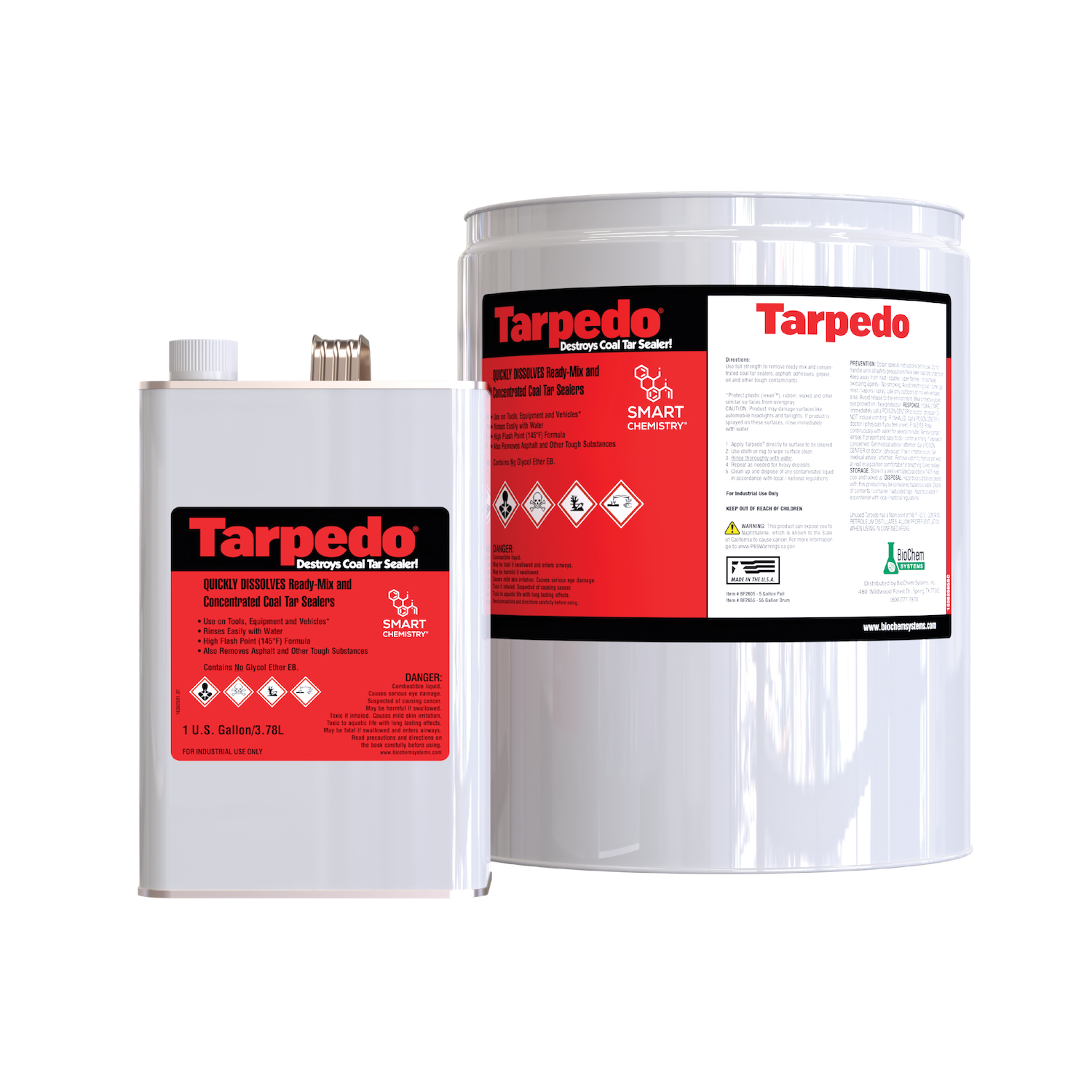
For tougher residue, such as dried sealer or stubborn crack filler, Tarpedo can be used to clean tools and application equipment.
Tarpedo is a solvent formulated to dissolve coal tar sealer, asphalt residue, adhesives, grease and oil. It can be used on hand tools, application units and maintenance vehicles, and rinses easily with water after cleaning. Its high flash point also supports safer handling during routine equipment cleanup.
When to Choose Hot-Pour vs. Cold-Pour Crack Fillers
Selecting the right crack filler depends on the type of pavement, visibility, maintenance goals and overall performance needs. Both hot-pour and cold-pour materials play important roles in pavement preservation, but they are not interchangeable. Here’s how they compare.
When to Use Hot-Pour Crack Fillers
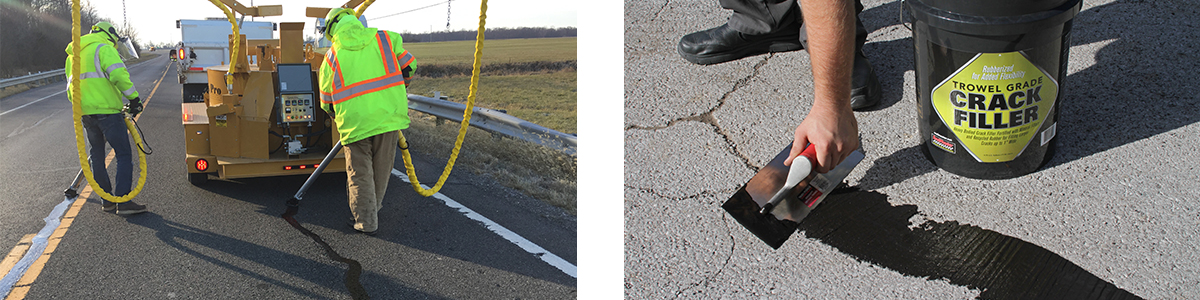
Hot-pour crack fillers are heated blocks of rubberized asphalt applied using an oil-jacketed melter. They are commonly used on high-volume pavement such as roads, highways and military bases.
Hot-Pour is best suited for:
- Roads, highways, airports and military bases
- High-performance applications requiring maximum durability
- Projects where fast set times (10 minutes or less) are essential
- Pavement surfaces not typically sealcoated
- Areas where minor aesthetic impact is not a concern
Hot pour provides strong performance across millions of miles of roadway but is not ideal for parking lots and driveways that require cleaner, narrower application lines to achieve the best curb appeal.
When to Use Cold-Pour Crack Fillers
Cold-pour crack fillers are the recommended choice for parking lots and driveways, where appearance, precise application and compatibility with sealcoating are especially important.
Cold-Pour Filler is best suited for:
- Parking lots and driveways
- Surfaces where curb appeal matters
- Applications requiring tighter, cleaner crack lines
- Minimizing spillover and excess material outside the crack
- Jobs where cost efficiency and time savings matter
- Surfaces that will be sealcoated
Cold-pour materials provide better control during application, resulting in a narrower crack profile and significantly less material buildup beyond the crack. This precision is especially important in parking lots and driveways where wide, heavy banding from hot pour—often up to 5 inches across—serves no added purpose in protecting the crack and can ultimately reduce curb appeal. When hot pour is applied heavily and the surface is later sealcoated, the thick banding can cause tearing or rippling in the sealer. Cold-pour crack fillers avoid this issue by producing a cleaner, more refined application that blends well with sealcoat and maintains the overall appearance of the pavement. Because of these advantages, cold-pour crack fillers remain the more effective, time-efficient and visually consistent choice for parking lots and driveways.
Learn More About Pavement Protection & Sealcoating
Crack sealing is only one part of a comprehensive asphalt maintenance program. To see how sealcoating protects pavement from UV rays, oxidation, moisture and daily traffic, explore our step-by-step guide, Sealcoat 101: How to Sealcoat Asphalt Pavement. This guide walks you through surface preparation, crack repair, sealer application methods and best practices for achieving a long-lasting, professional finish.
Read the full guide: Sealcoat 101: How to Sealcoat Asphalt Pavement
SealMaster Expertise and Support
With more than 60 years of industry experience and over 3 billion gallons of pavement sealer applied worldwide, SealMaster is recognized as the No. 1 brand of pavement sealer.
As a one-stop source for pavement maintenance solutions, SealMaster offers premium products, equipment and training through a franchise network of 125+ manufacturing and distribution centers across North America—along with product distribution in more than 60 nations. This extensive reach ensures contractors, municipalities and property owners get the support they need to maintain and extend the life of their pavement.
SealMaster’s national network of professional contractors provides full-service pavement maintenance solutions, including pothole repair, crack filling, sealcoating and line striping. For expert guidance, product recommendations or to connect with a pavement maintenance specialist, contact your local SealMaster for a free inspection or project estimate.