Choosing a sealcoat trailer starts with understanding the work you expect it to handle. Job size, daily material use, application method, towing requirements and equipment features should all factor into your decision.
The goal isn’t simply to buy the largest sealcoat tank available. It’s to choose a setup with the capacity and capabilities your crew needs for the work you do.
Whether you’re purchasing your first sealcoat trailer, adding another unit or moving up to a larger tank, here’s what to consider.
What You’ll Learn
- Match Your Sealcoat Tank Size to Your Jobs
- How Much Sealer Do You Typically Use?
- How Often Will You Need to Refill?
- Choose Your Sealcoating Application Method
- Can Your Truck Handle a Larger Sealcoat Trailer?
- Look Beyond Sealcoat Tank Size
- Explore SealMaster Sealcoating Equipment
- Which Sealcoating Equipment Is Right for You?
- Learn More about Choosing Asphalt Sealcoating Equipment
- SealMaster Expertise & Support
Match Your Sealcoat Tank Size to Your Jobs
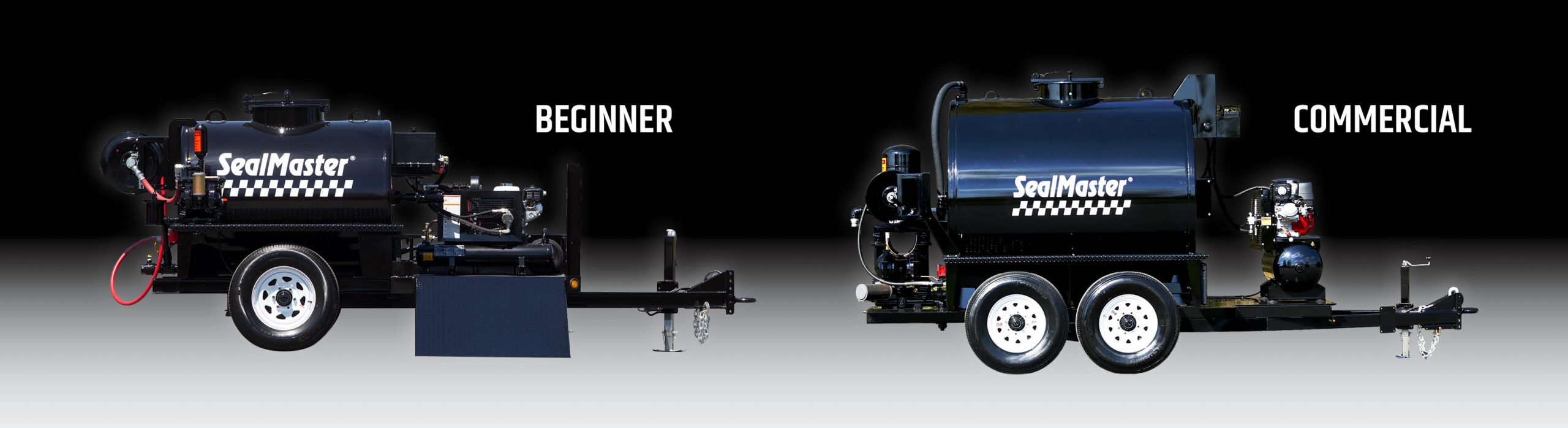
Start with the work your crew handles most often. For contractors primarily sealcoating driveways and smaller parking lots, a portable sealcoating system or a sealcoat trailer with around a 300-gallon tank may provide enough capacity. As you take on larger parking lots and commercial projects, a 575-gallon or larger sealcoat tank gives you more material capacity.
Don’t base your decision on your largest job of the year. Choose a tank size that makes sense for the work that fills most of your schedule.
How Much Sealer Do You Typically Use?
Once you understand the size of the jobs you handle, look at how much sealer those jobs require. Square footage alone doesn’t tell the whole story. The product being applied, recommended application rate, number of coats, pavement condition and mix design can affect how much material a project requires.
Use your previous jobs as a guide. Look at how many gallons your crew typically applies in a day and how often you need to refill. If you’re purchasing your first sealcoat trailer, estimate material needs based on the types and sizes of projects you expect to handle.
Working backward from your actual material needs can give you a much better idea of whether a 300-, 575-, 750- or 1,000-gallon sealcoat tank makes sense for your operation.
How Often Will You Need to Refill?
Tank capacity can make a noticeable difference when your crew is moving through several jobs or working on a large property. If you regularly have to stop in the middle of a job to refill your sealcoat tank, it may be a sign that your current setup is too small for the work you’re taking on.
Think about where you typically get your sealer and how far your jobs are from that location. A contractor working close to a SealMaster location may be comfortable refilling more often, while crews traveling farther or working on larger projects may benefit from carrying more material.
The goal isn’t necessarily to complete every job on a single tank. Instead, consider how tank capacity fits into your normal workday. If frequent refills are consistently interrupting your schedule, moving up to a larger sealcoat tank may make sense for your operation.
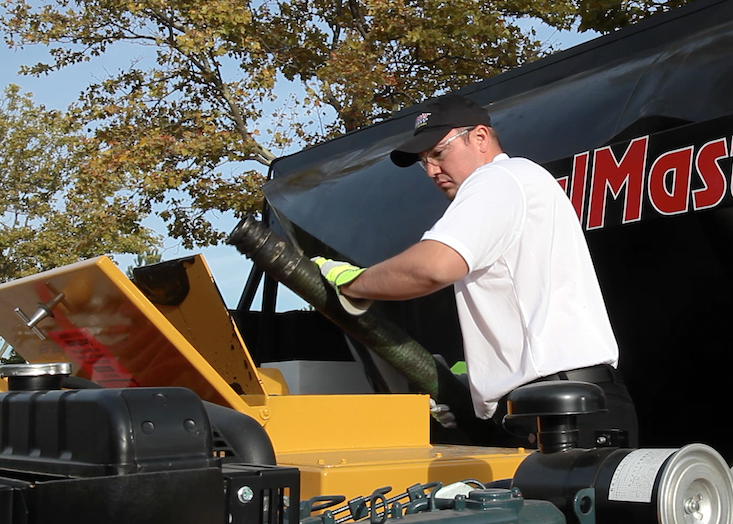
Choose Your Sealcoating Application Method
Do you primarily apply by spray, squeegee or find yourself needing both depending on the pavement and project?
Spray systems are often available in portable, trailer- and skid-mounted configurations, while self-propelled equipment is available for squeegee application. Contractors who use both methods can also choose dual spray and squeegee equipment. If your crew applies a first coat by squeegee followed by a second coat by spray, a dual machine gives you both capabilities in one system.
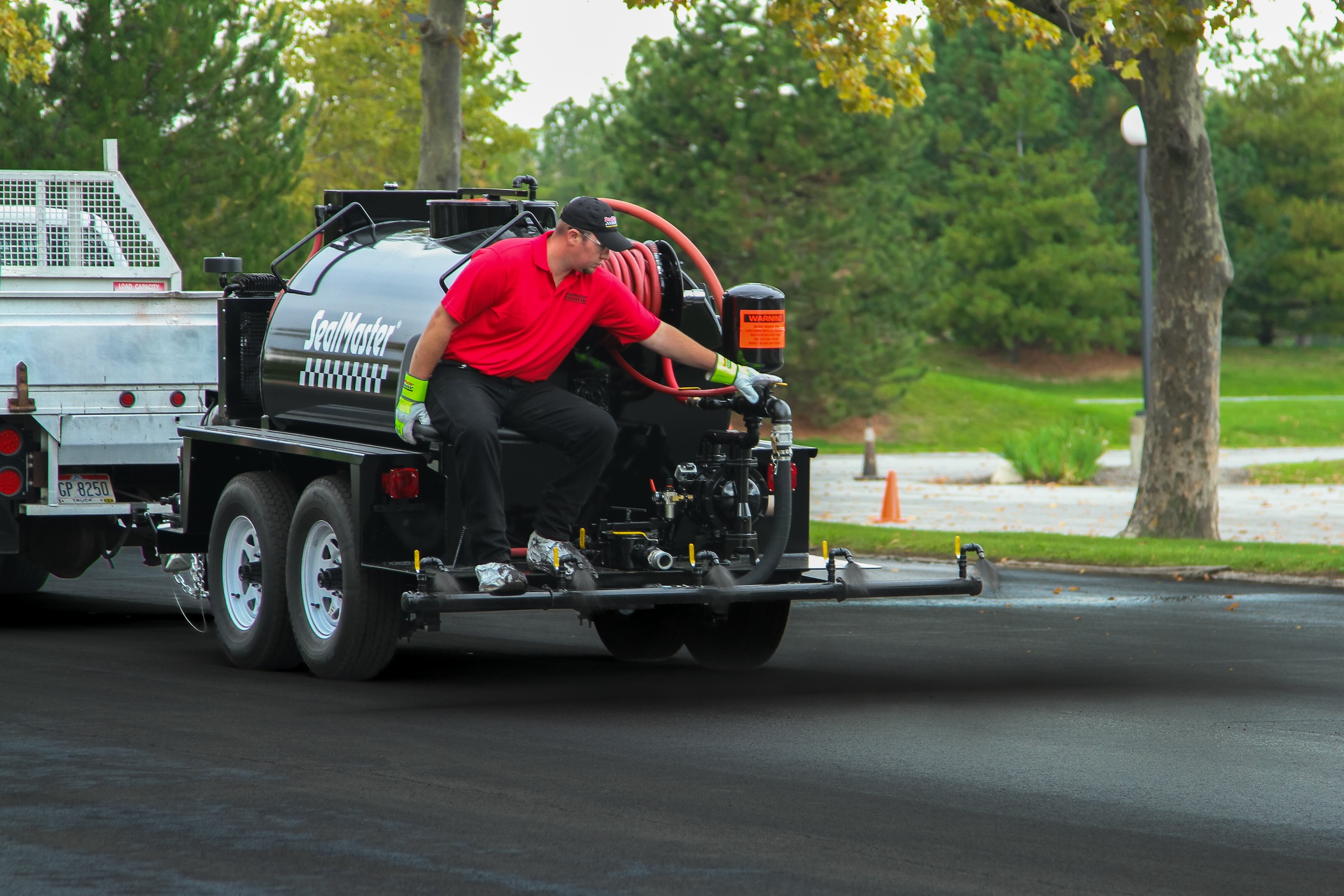
Can Your Truck Handle a Larger Sealcoat Trailer?
More tank capacity also means more weight. Before moving up to a larger sealcoat trailer, make sure your tow vehicle can safely handle the fully loaded setup.
Consider the weight of the trailer, sealer, equipment, tools and anything else you regularly carry. Compare that total with your vehicle’s towing and payload limits as well as the weight ratings of the trailer and its components.
If you’re moving from a portable system or smaller trailer into a 575-, 750- or 1,000-gallon tank, your tow vehicle should be part of the decision.
Look Beyond Sealcoat Tank Size
Gallons aren’t the only thing that matters. Compare the pump and agitation system, hose length, spray wand, spray bar, squeegee capabilities and available deck space.
Also consider options such as water tanks, storage, lighting, extended decks and loading ramps. The right features can make your equipment better suited to the way your crew works in the field.
Explore SealMaster Sealcoating Equipment
Once you have a better idea of the tank capacity, application method and features you need, it’s time to start looking at equipment that fits the way you work.
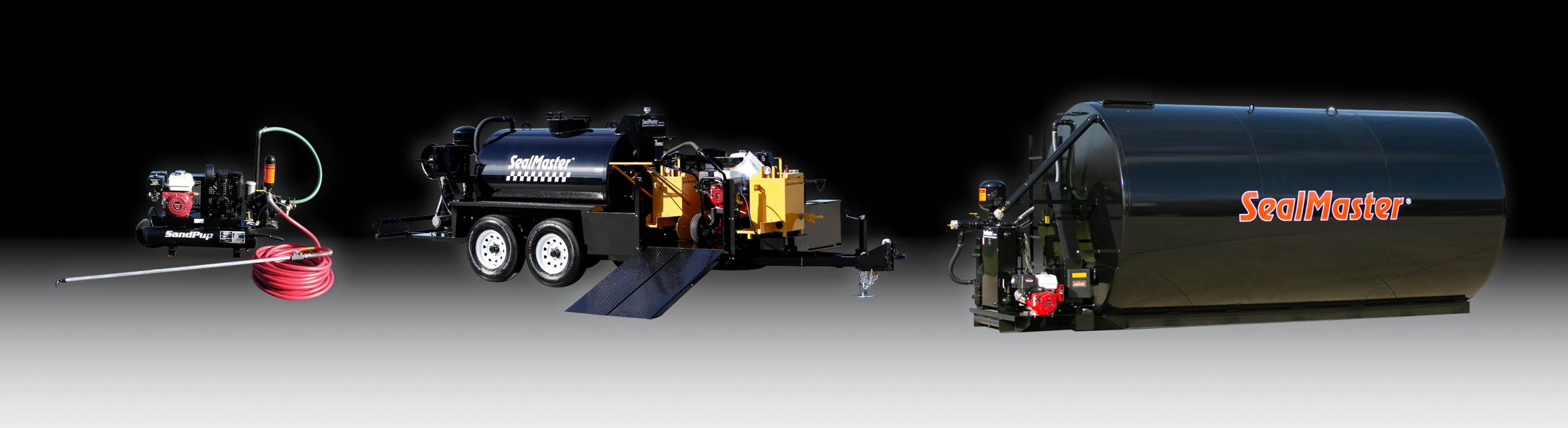
SealMaster offers sealcoating equipment in a variety of configurations and tank sizes. Spray equipment is available in trailer-mounted, skid-mounted and portable configurations, giving contractors options for everything from smaller jobs to larger commercial projects.
For contractors who apply sealer by squeegee, SealMaster also offers dedicated squeegee equipment as well as dual spray and squeegee machines. These systems are available in multiple configurations and capacities to match different application needs and job sizes.
With so many options available, choosing the right sealcoating machine comes back to the questions you’ve already answered: How much material do you need? How do you apply it? What types of jobs do you handle? And where do you want your business to go next?
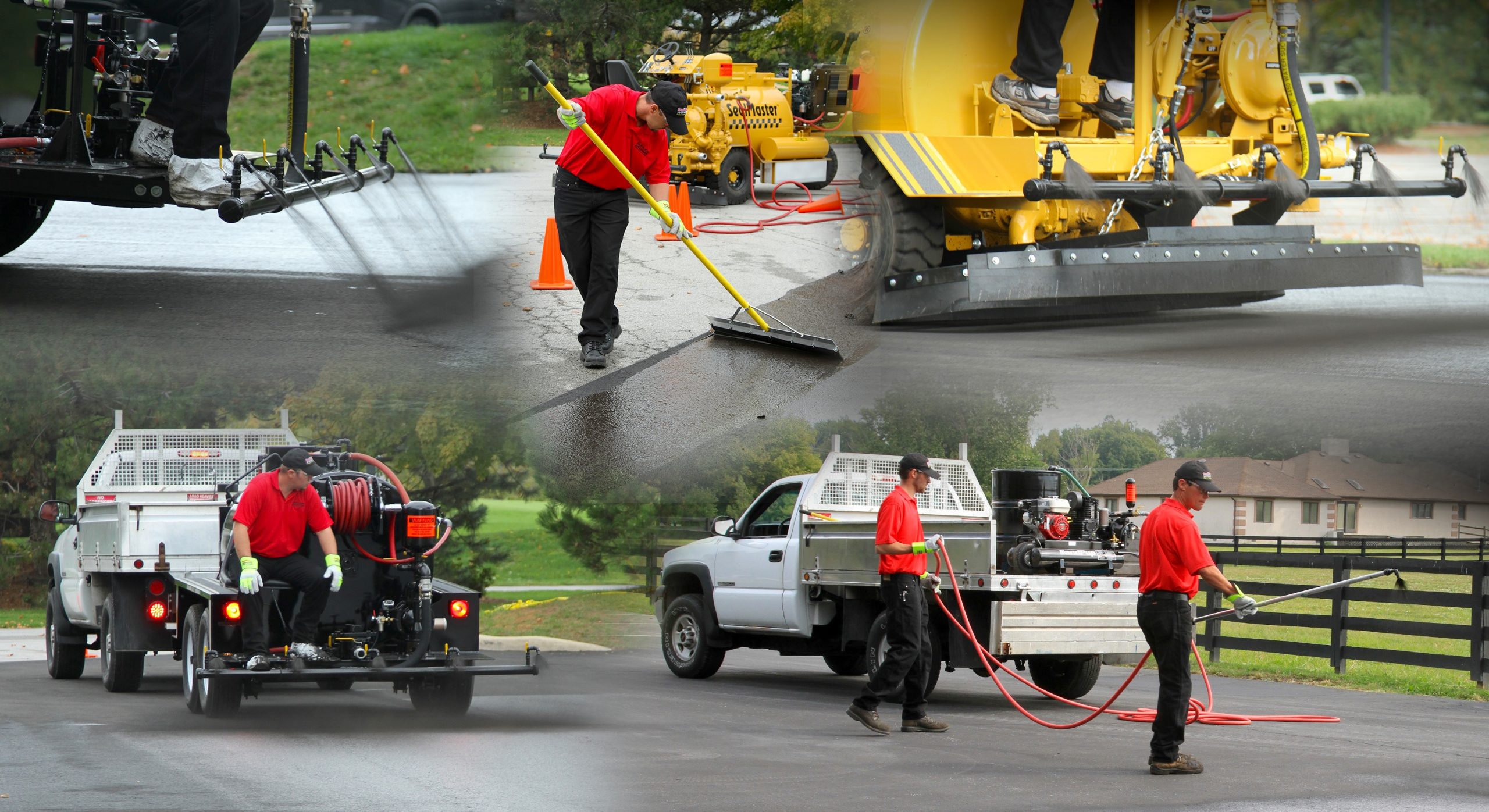
Sealcoating Spray Equipment
Once you know the capacity, application method and features you’re looking for, compare the SealMaster equipment configurations that fit those needs.
SprayMaster Sealcoat Trailers
For contractors looking for a complete tow-behind sealcoating system, SealMaster SprayMaster trailers are built to handle the demands of daily sealcoating work. Trailer-mounted options range from 300 to 1,000 gallons, with the popular SprayMaster lineup available in 575-, 750- and 1,000-gallon capacities.
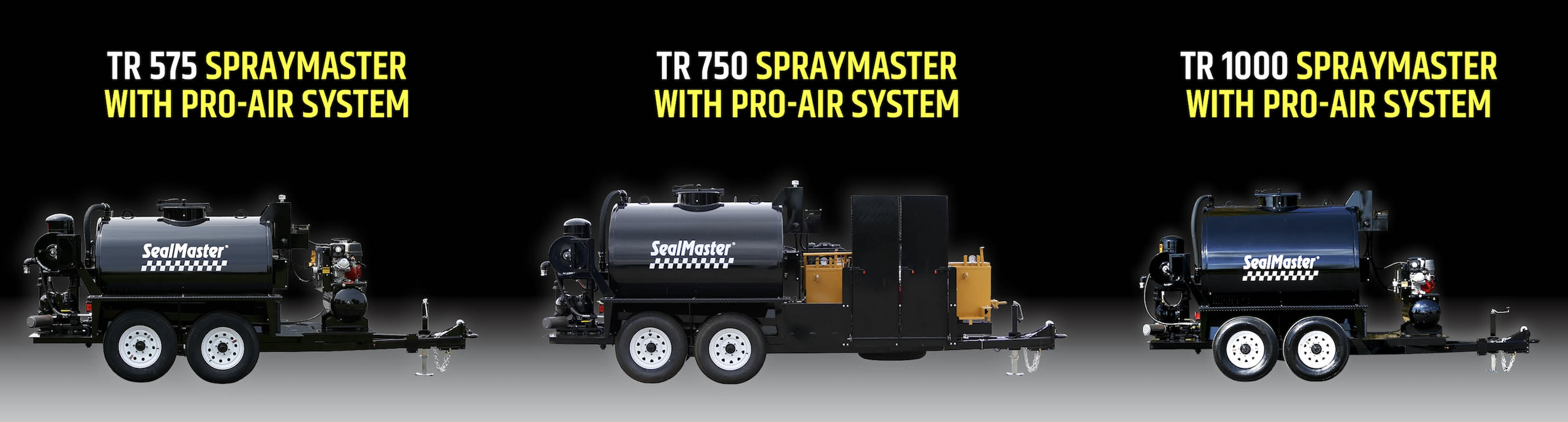
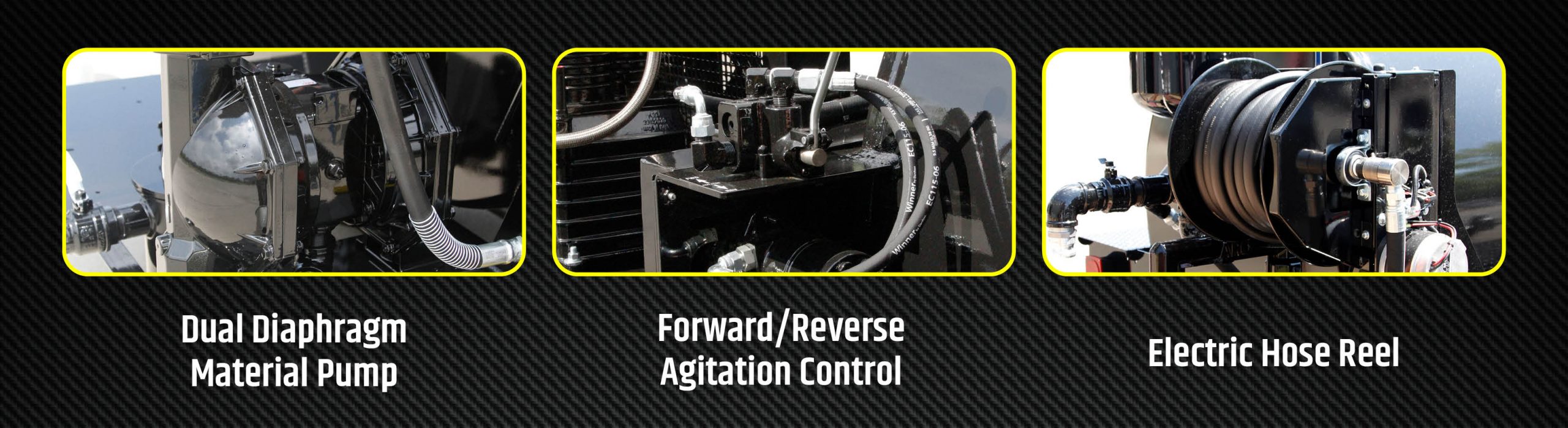
SprayMaster trailers feature full-sweep hydraulic agitation with rubber wiper blades to keep material properly mixed and prevent buildup on the tank walls. A high-output, air-driven dual diaphragm pump is designed to handle pavement sealers with or without sand, while a 75-foot hose and spray wand provide plenty of reach on the job. Heavy-duty axles, a safety break-away braking system, basket strainer and hose reel round out a system built for everyday use.
One of the biggest advantages of a SprayMaster trailer is the ability to build it around the way your crew works. Available options include spray bar configurations, extended decks, loading ramps, water tanks and pumps, brush water boxes, electric hose reels, work lights, equipment mounting kits and more.
Skid-Mounted Sealcoat Spray Systems
Want the proven performance and features of a SprayMaster in a skid-mounted setup? SealMaster skid-mounted systems bring many of the same heavy-duty components and application capabilities to a configuration designed to mount directly to your truck.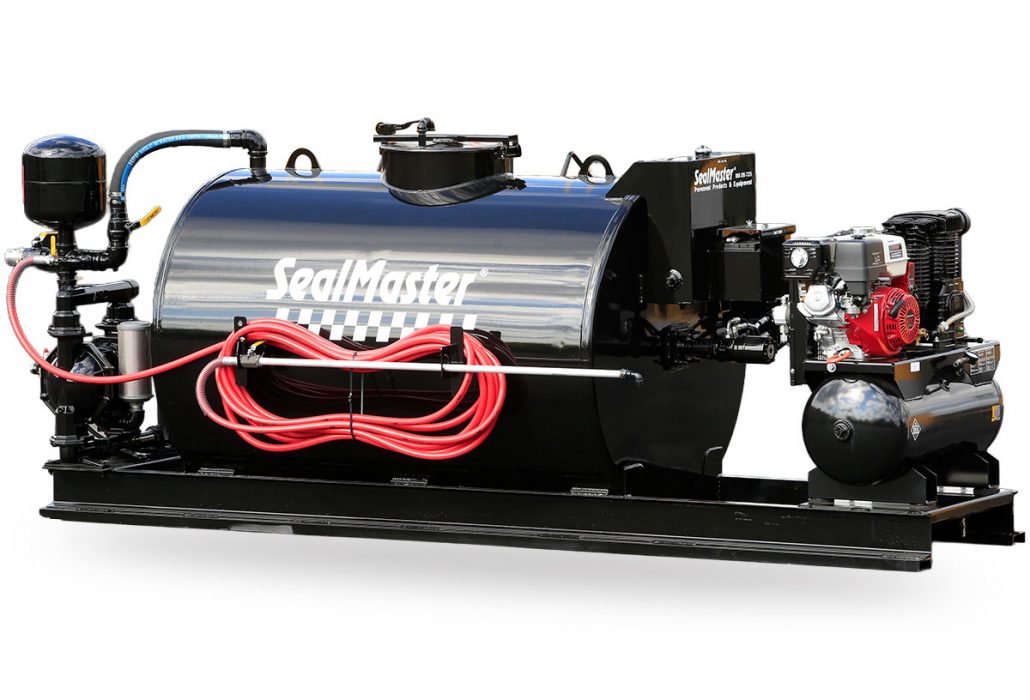
Available in capacities from 300 to 2,000 gallons, skid-mounted systems give contractors options ranging from compact setups to high-capacity sealcoating rigs. Depending on the model, features include full-sweep hydraulic agitation, high-output material pumps, filtration systems and spray hose and wand assemblies.
Portable Sealcoating Machines
Add spray capability without investing in a full-size tank system. SealMaster offers three portable options: the Porta-Pump, SandPup and SandPup II.
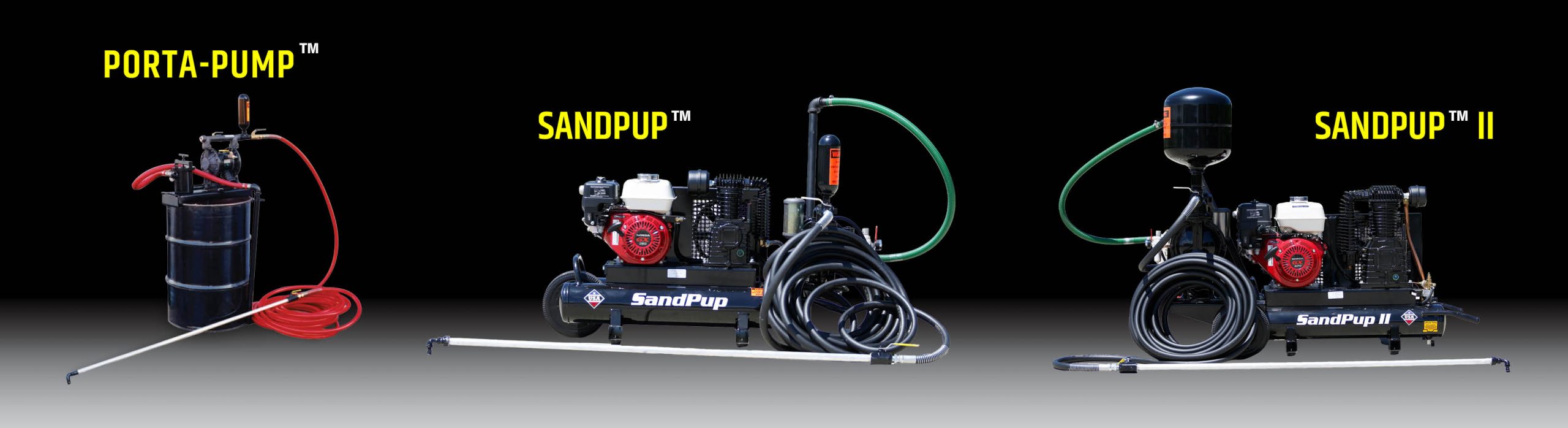
The Porta-Pump turns a standard 55-gallon drum into a convenient spray system, while the SandPup and higher-output SandPup II are built to spray pavement sealers with sand. Their versatility goes beyond sealcoating, with the ability to apply cold-pour crack sealants, water-based tack coat and other compatible materials.
Need More Capacity? Consider a Custom Sealcoat Truck
For contractors handling large-volume sealcoating projects, a custom sealcoat truck may be another viable option. A dedicated truck setup provides space for a high-capacity sealcoat system with the tools, materials and equipment needed for larger operations.
If your workload has grown beyond what makes sense for a trailer or skid-mounted setup, talk with your local SealMaster representative about custom equipment options for your operation.
Squeegee Sealcoating Equipment
For contractors who prefer squeegee application, the SealMaster SP 300 and SP 575 combine material storage, agitation and application into one maneuverable, ride-on machine.
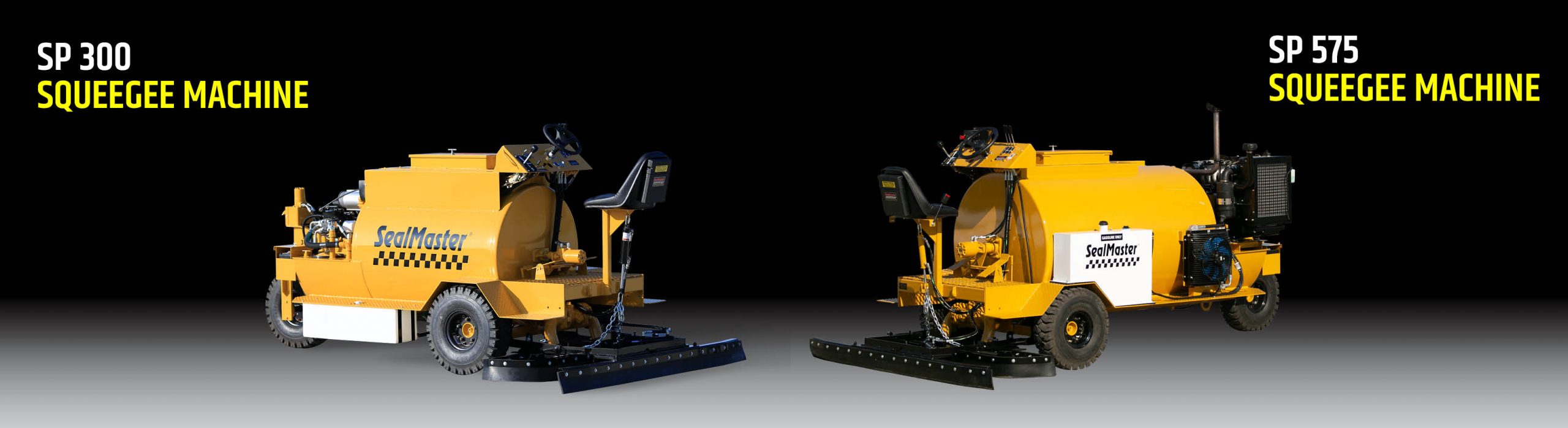
Both squeegee machines feature true full-sweep agitation, power steering and floating squeegee assemblies with front box and rear-angling squeegees for greater application versatility. Choose the 320-gallon SP 300 for a more compact setup or the 575-gallon SP 575 when you need additional material capacity.
Spray and Squeegee in One Machine
Want the flexibility to spray, squeegee or do both? The SP 300 Dual and SP 575 Dual combine both capabilities in one self-propelled machine.
Both Dual machines offer true full-sweep agitation, a SandPumper II material pump, power steering, a floating squeegee assembly and a 75-foot hose and spray wand. Contractors can also use these machines for the “gold standard” application method: a squeegee coat to work material into the pavement followed by a spray coat for a smooth, uniform finish.

Which Sealcoating Equipment Is Right for You?
There is no one-size-fits-all approach to choosing sealcoating equipment. The right setup depends on the jobs you handle, how much sealer you typically use, your preferred application method and how you transport your equipment.
Whether that means a portable spray system, sealcoat trailer, skid-mounted tank or self-propelled machine, choose equipment that meets your needs today while giving your operation room to grow.
Not sure which setup is right for you? Your local SealMaster professional can help you compare tank sizes, equipment configurations and available options to find the right fit for your operation.
Learn More About Choosing Asphalt Sealcoating Equipment
Choosing the right tank size is an important first step, but there’s more to consider when investing in sealcoating equipment. From pumps and agitation systems to application methods and available features, each part of the machine can make a difference in finding the right fit for your operation. Take a closer look at what to consider before making your next equipment purchase.
Read Next: Selecting Sealcoating Equipment for Long-Term Growth
SealMaster Support & Expertise
Choosing the right sealcoating equipment is an investment in your operation. SealMaster can help you compare equipment, tank capacities, application systems and available options to find a setup that fits the way you work.
With a nationwide network of locations, SealMaster provides the equipment, parts, service and support contractors need before and after the sale.
Call (800) 395-7325 to connect with a SealMaster professional near you and find the right sealcoating equipment for your operation.