Is pavement sealer best applied by spray, by squeegee or by using a combination of both methods? The answer depends on pavement condition, performance expectations and production goals.
Historically, squeegee application was the primary method used in the pavement sealcoating industry. Early spray applications were often inconsistent and relied on improvised equipment, leading to skepticism among contractors and property owners. Over time, advancements in equipment design and material handling have led to the development of modern spray systems capable of applying water-based pavement sealers with consistent coverage and heavy sand loadings.
Today, millions of gallons of pavement sealer are applied each year using both spray and squeegee methods. When applied correctly, each method can deliver quality results. Understanding how technique interacts with the pavement surface helps contractors determine which approach best supports long-term performance.
What You’ll Learn
- Understanding Sealcoating Application Techniques
- How Sealcoating Methods Affect Surface Coverage
- Combining Spray and Squeegee Application Methods
- Benefits of Spray Application
- Benefits of Squeegee Application
- Spray or Squeegee: Which Method Lasts Longer?
- Cost Considerations
- Factors That Influence Application Method Selection
- Selecting Sealcoating Methods Effectively
- Learn More About Sealcoating and Equipment Selection
- SealMaster Expertise and Support
Understanding Sealcoating Application Techniques
When considering spray or squeegee sealcoating, the appropriate application method depends on pavement condition, project scope and long-term maintenance objectives. Both methods are widely used throughout the industry and, when applied correctly, can deliver effective pavement protection.
Advancements in sealcoating materials and application equipment have significantly improved the consistency and reliability of both spray and squeegee methods. As a result, many contractors incorporate one or both techniques depending on surface conditions and performance goals.
How Sealcoating Methods Affect Surface Coverage
The way pavement sealer is applied affects how the material penetrates, bonds and performs over time. Application method influences material distribution across the surface as well as interaction with pavement pores and aggregate.
Evaluating these differences helps contractors determine which approach best supports pavement protection and appearance requirements.
Spray Application
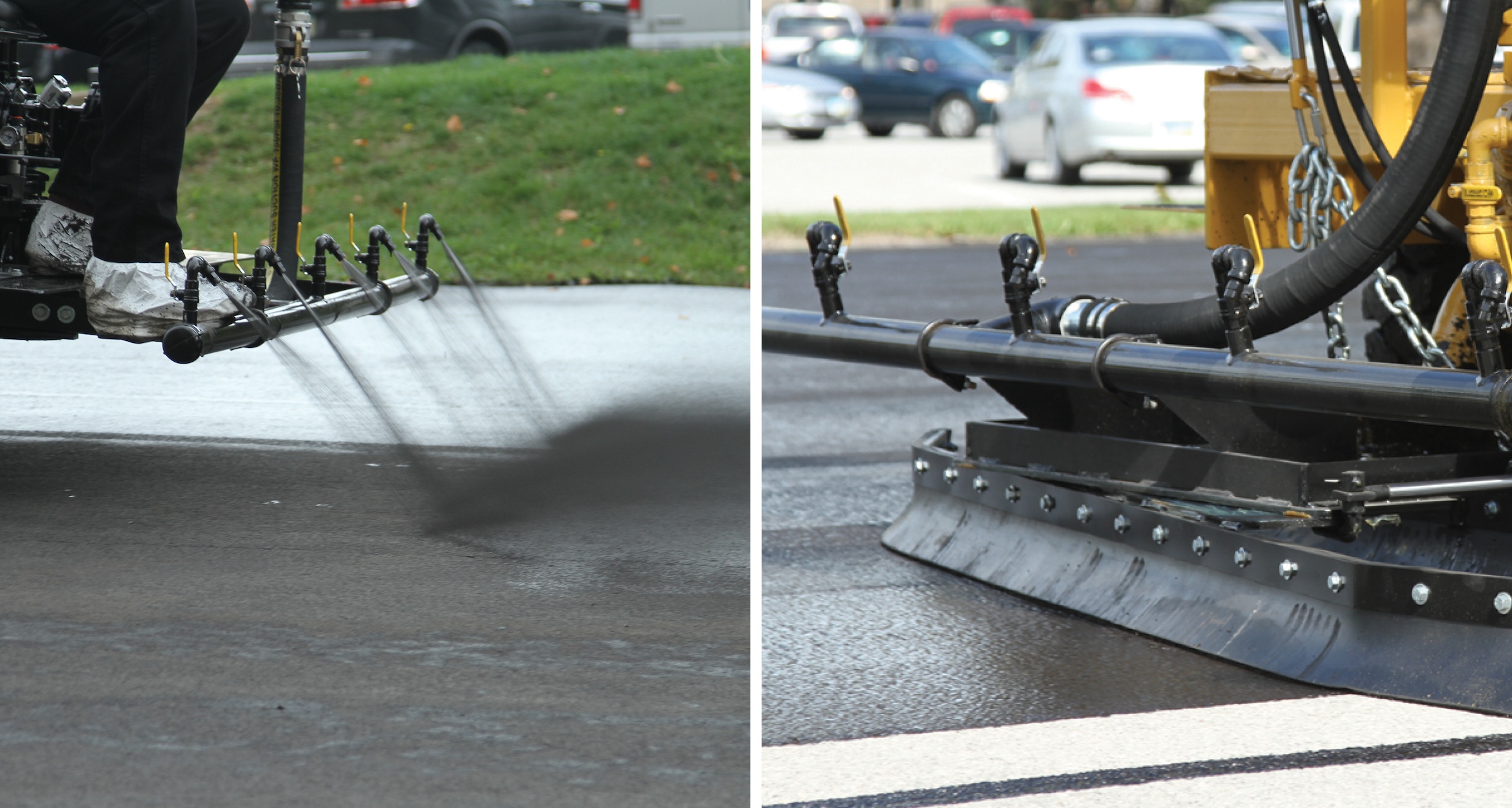
Spray application delivers pavement sealer evenly across the surface, coating the tops of the aggregate while allowing material to enter surface pores. Modern spray systems are designed to apply sealcoating materials consistently and efficiently across large surface areas.
Key characteristics of spray application include:
- Uniform material distribution
- Consistent appearance and color
- Efficient coverage on large or open areas
Spray application is commonly used on commercial parking lots and large pavement surfaces where productivity and appearance are priorities. Many contractors apply multiple spray coats to build sufficient material on the aggregate while maintaining a smooth, uniform finish.
Squeegee Application
Squeegee application uses mechanical force to work sealcoating material directly into the pavement surface. The squeegee pushes material into pores, voids and surface irregularities, helping establish a strong mechanical bond with the asphalt.
Key characteristics of squeegee application include:
- Deeper penetration into porous pavement
- Enhanced bonding through mechanical action
- Increased material usage per square yard on most surfaces
Squeegee application is often selected for older or more porous pavement where additional penetration and surface sealing are desired. This method helps lock in surface fines and improve waterproofing performance.
Combining Spray and Squeegee Application Methods
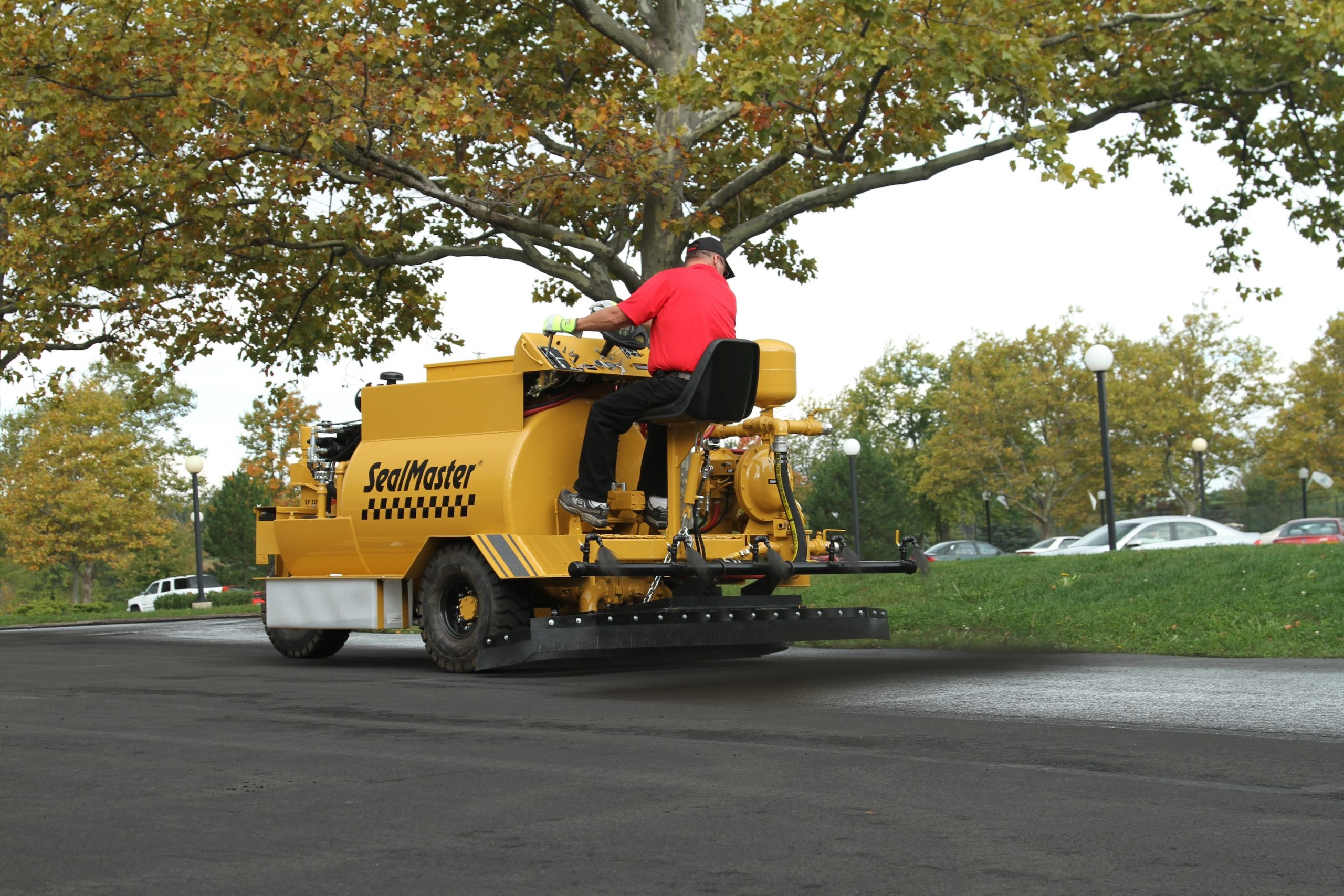
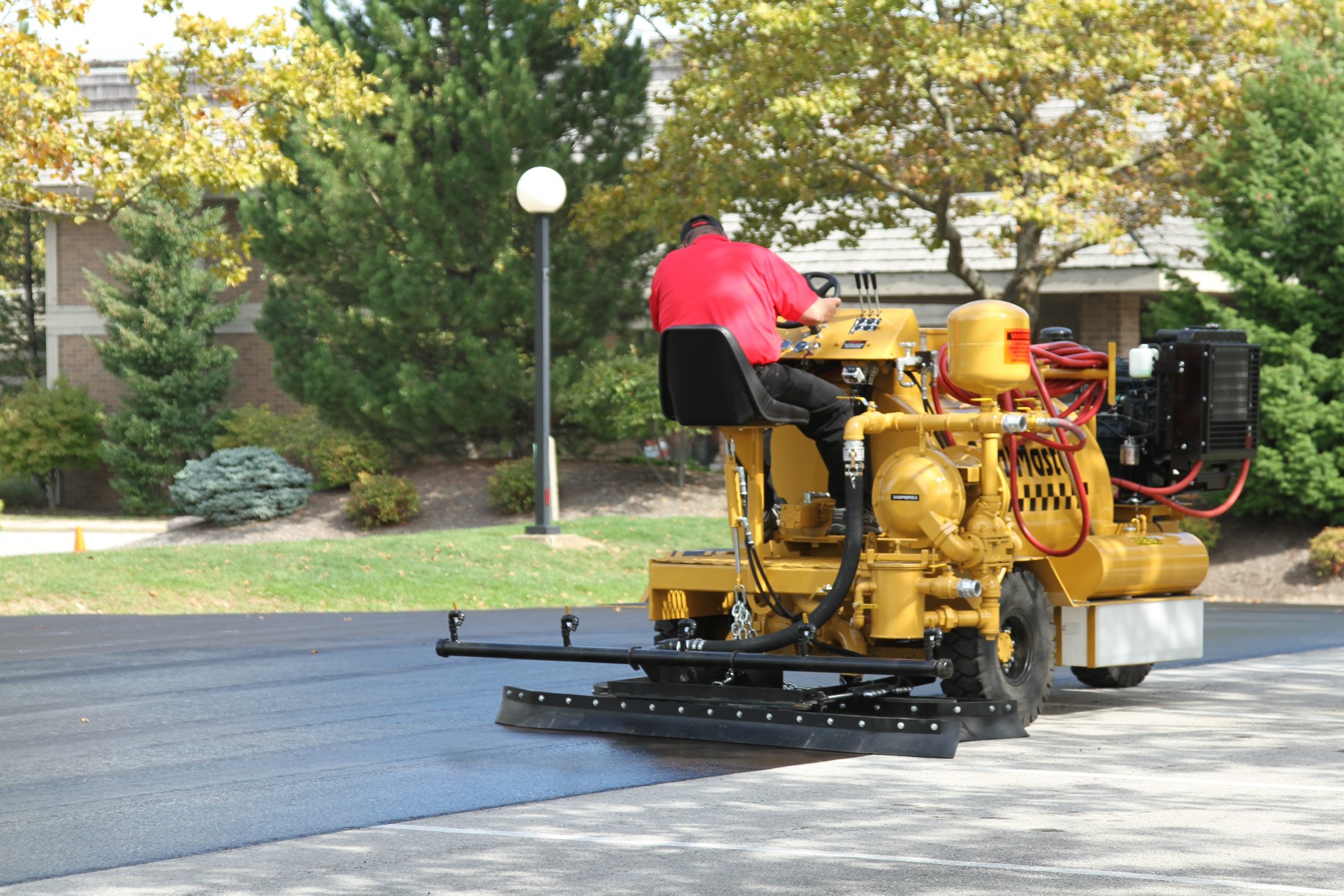
Many professional contractors use a combination of spray and squeegee application methods to maximize performance. This approach allows each method to be used where it is most effective.
A common sequencing strategy includes:
- Applying the first coat by squeegee to fill surface pores and establish a strong bond
- Applying subsequent coats by spray to build material on the aggregate and improve the appearance
Application sequencing may vary based on pavement condition, traffic exposure and project specifications. Contractors should evaluate each project individually when determining the most effective approach.
Benefits of Spray Application
Spray application provides advantages related to efficiency, consistency and surface appearance. Modern spray systems are designed to distribute sealcoating material evenly across the pavement surface, creating uniform coverage and a consistent finish.
Key benefits of spray application include:
- Uniform material distribution across the aggregate surface
- Consistent color and appearance
- Faster production rates on large or open areas
Spray application is often used to build material on the surface following initial penetration, making it an effective finish-coat method when appearance and productivity are priorities.
Benefits of Squeegee Application
Squeegee application offers advantages related to material penetration and surface engagement. By mechanically working sealer into the pavement surface, this method helps address surface porosity and irregularities that are common in aging asphalt.
Key benefits of squeegee application include:
- Improved penetration into porous or weathered pavement
- Strong mechanical bonding between the sealer and the asphalt surface
- Enhanced waterproofing by filling surface voids and hairline openings
Squeegee application breaks surface tension, helping the sealer bond better while stabilizing surface fines and supporting long-term pavement protection when used alone or as part of a multi-coat system.
Spray or Squeegee: Which Method Lasts Longer?
Sealcoating durability depends on multiple factors, including pavement condition, surface preparation, material selection and application rate. Application method plays a role in how the sealer performs, but it is not the sole determinant of service life.
In general:
- Squeegee application performs well on porous surfaces due to deeper penetration
- Spray application performs well on smoother, denser pavement by providing consistent surface coverage
For many projects, a combination of application methods provides a balance of penetration, protection and appearance.
Cost Considerations
Application method can influence labor requirements, material usage and overall project cost.
General considerations include:
- Spray application typically allows for faster production and reduced labor time
- Squeegee application may require additional labor and material, but can improve long-term pavement protection
Selecting the appropriate method involves balancing production efficiency with long-term pavement protection goals.
Factors That Influence Application Method Selection
Choosing a spray or squeegee application—or a combination of both—should be based on:
- Pavement age and condition
- Traffic volume and usage
- Performance expectations
- Long-term maintenance planning
Both application methods play an important role in professional pavement maintenance programs when applied correctly.
Selecting Sealcoating Methods Effectively
Spray or squeegee sealcoating methods are not competing approaches but complementary tools within a comprehensive pavement maintenance strategy. Understanding how each method affects pavement performance allows contractors to select the most effective application technique for each project.
When paired with proper surface preparation and quality materials, both spray and squeegee application methods support long-term pavement protection and professional results.
Learn More about Sealcoating & Equipment Selection
Sealcoating plays a critical role in extending the service life of asphalt pavement by protecting the surface from oxidation, moisture intrusion, ultraviolet exposure and daily traffic wear. Application method is one factor in performance, but long-term results also depend on using the right materials and equipment for the job.
To learn more about how equipment selection affects productivity, application consistency and long-term growth, explore our guide on selecting sealcoating equipment. Our guide outlines key considerations for contractors evaluating spray, squeegee and combination systems, along with system configurations designed to support residential and commercial work.
Read next: Selecting Sealcoating Equipment for Long-Term Growth
SealMaster Expertise and Support
With more than 60 years of industry experience and more than 3 billion gallons of pavement sealer applied worldwide, SealMaster is recognized as the No. 1 brand of pavement sealer.
As a one-stop source for pavement maintenance solutions, SealMaster provides professional-grade products, sealcoating equipment and training through a franchise network of more than 125 manufacturing and distribution centers across North America, along with product distribution in more than 60 nations. This extensive network ensures contractors, municipalities and property owners receive consistent support to maintain and extend pavement life.
SealMaster’s national network of professional contractors delivers full-service pavement maintenance solutions, including pothole repair, crack filling, sealcoating and line striping. For expert guidance, product recommendations or to connect with a pavement maintenance specialist, contact your local SealMaster for a free inspection or project estimate.